
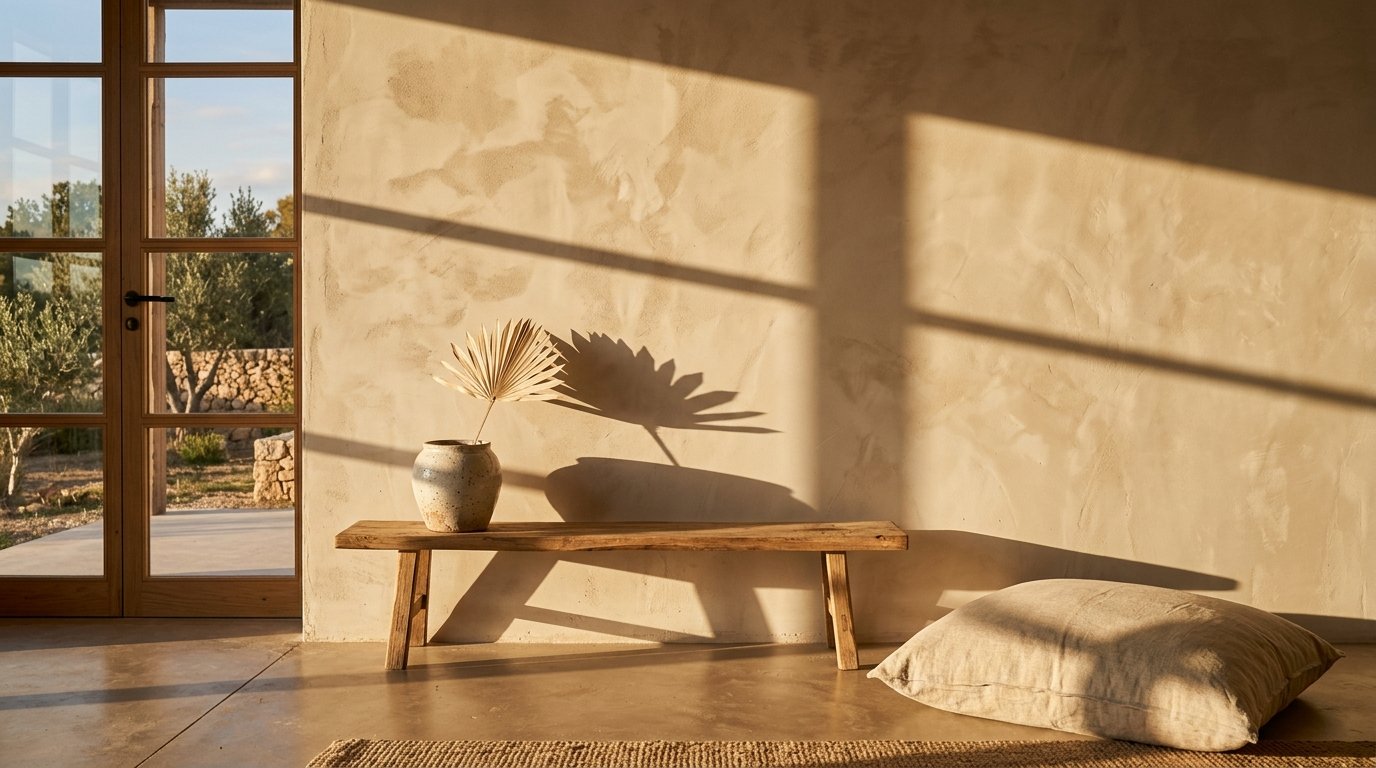
Did you know that visual clutter can actually spike your cortisol levels and induce low-grade anxiety? If your living space currently feels more chaotic than calming, it is time to master the art of intentional interior styling. Whether you are maximizing a cozy UK flat or updating a spacious US suburban home, transforming your room doesn’t mean stripping it bare until it feels cold and sterile. By focusing on smart room layouts, engaging DIY design projects, and selecting the right premium materials, you can curate a serene sanctuary that still feels incredibly warm. This comprehensive buying guide will walk you through 16 genius minimalist living room ideas you need to try to achieve that magazine-worthy aesthetic.
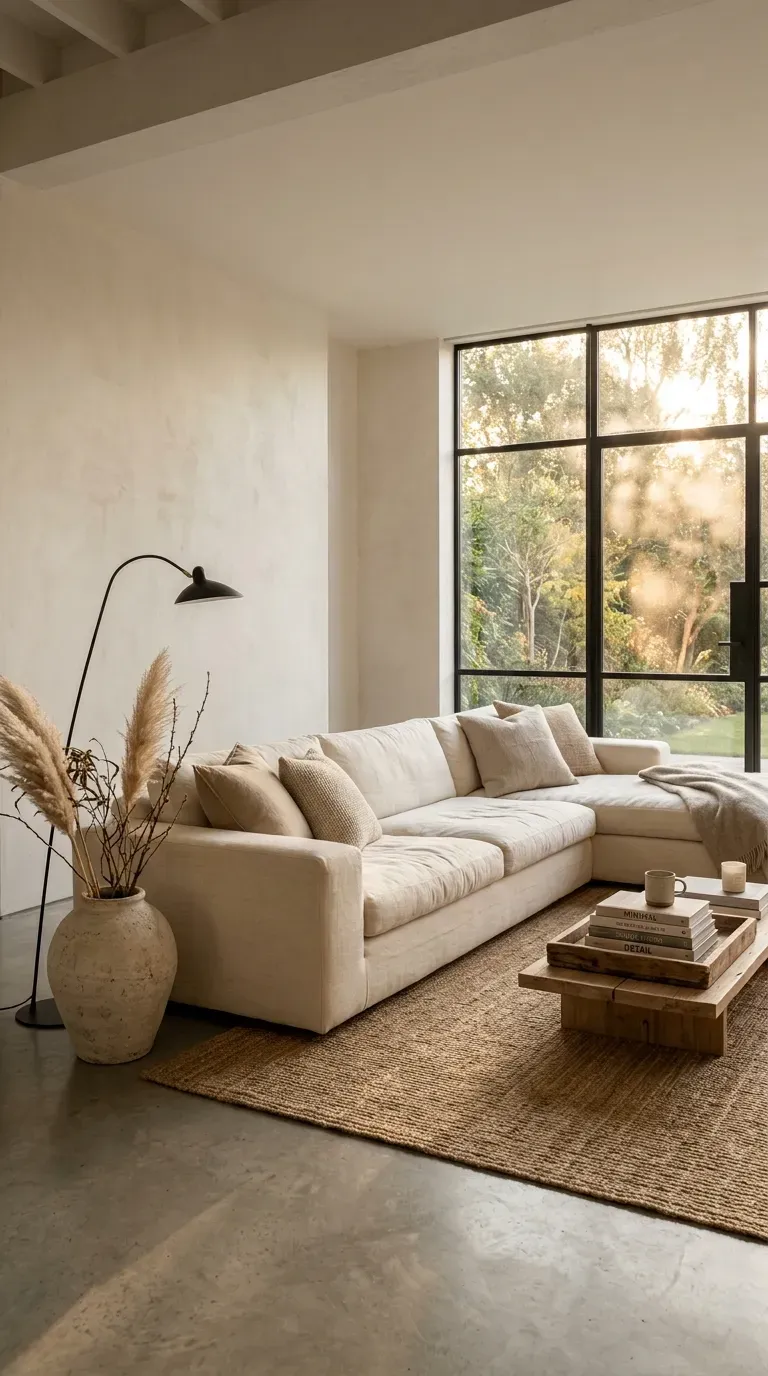
1. The Premium Statement Sofa
Anchoring your living room with a high-quality, neutral sofa is the ultimate foundation for minimalist design. Instead of crowding the room with multiple small chairs, opting for a single, substantial investment piece creates an immediate sense of luxurious calm. Look for clean, tailored lines and highly durable, premium materials like performance linen or top-grain leather that will stand the test of time.
Why this idea works:
A singular, oversized furniture piece reduces visual fragmentation. By limiting the number of “legs” on the floor, the room instantly feels larger, more cohesive, and easier for the eye to process.
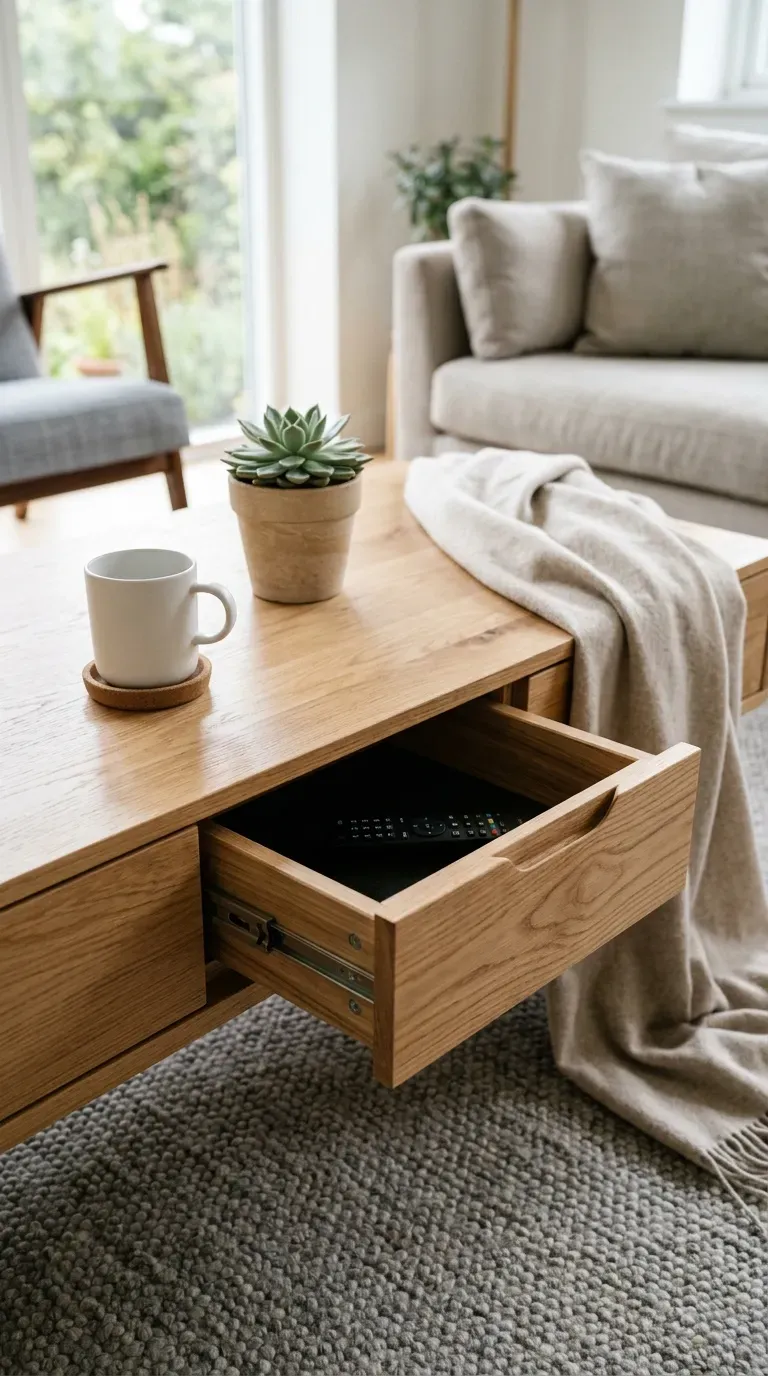
2. Strategic Hidden Storage Coffee Tables
Clutter is the enemy of the minimalist aesthetic, which is why multifunctional furniture is absolute must-have equipment. A sleek coffee table equipped with seamless, push-to-open hidden drawers allows you to stash remotes, coasters, and magazines out of sight. When planning your room layout, investing in smart storage solutions is always better than adding bulky external cabinets.
Why this idea works:
It bridges the gap between everyday practicality and high-end aesthetics. Concealed storage maintains the unbroken, sleek lines of the room while keeping your daily essentials within arm’s reach.
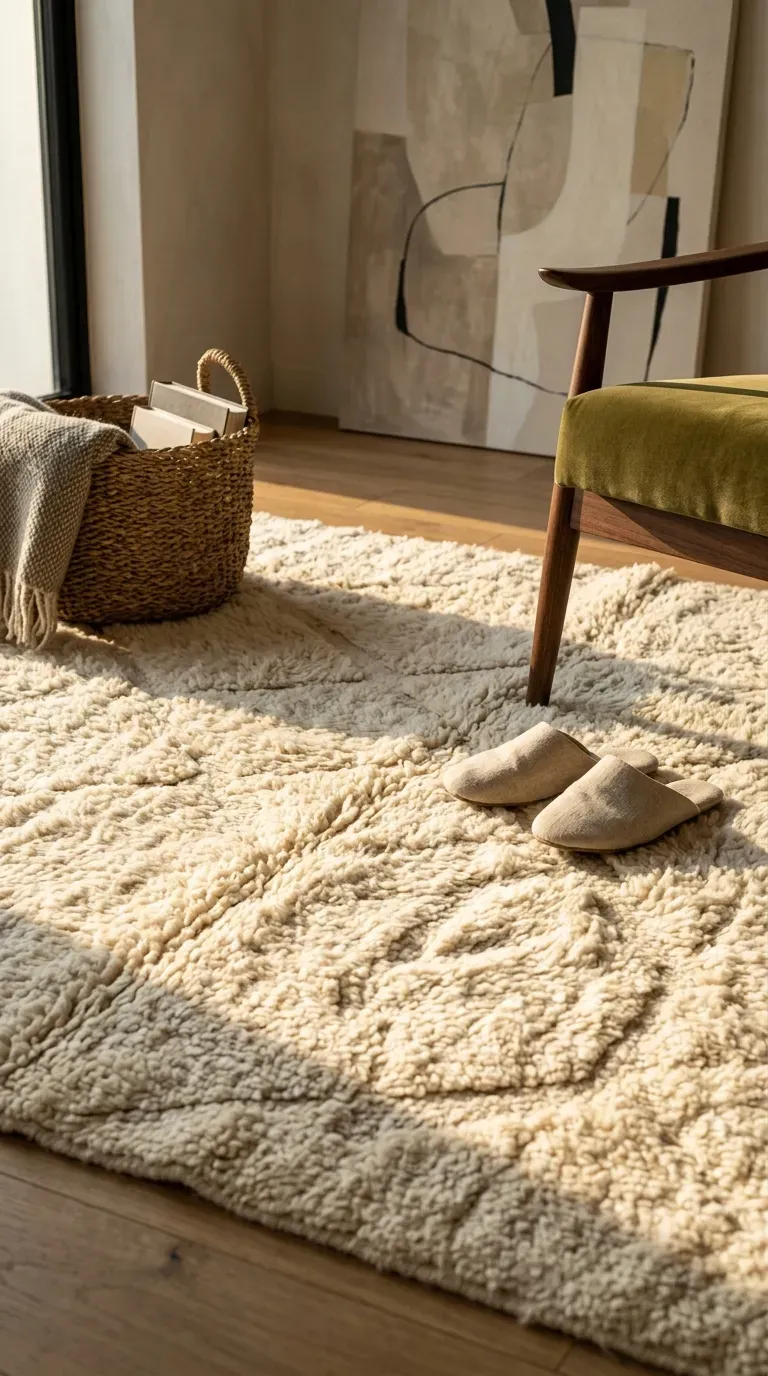
3. Monochromatic High-Pile Area Rugs
When you remove excess decor, texture becomes your primary design tool. Introducing a luxurious, high-pile area rug in a monochromatic tone (like ivory, stone, or soft taupe) adds incredible depth without introducing chaotic patterns. In the budget vs. luxury debate, spending a bit more on a dense, premium rug completely transforms the acoustics and feel of the space.
Why this idea works:
A plush, textured rug grounds the seating arrangement and adds tactile warmth. It creates a defined “zone” in open-concept layouts while keeping the color palette blissfully quiet.
4. Architectural Slat Wall Paneling
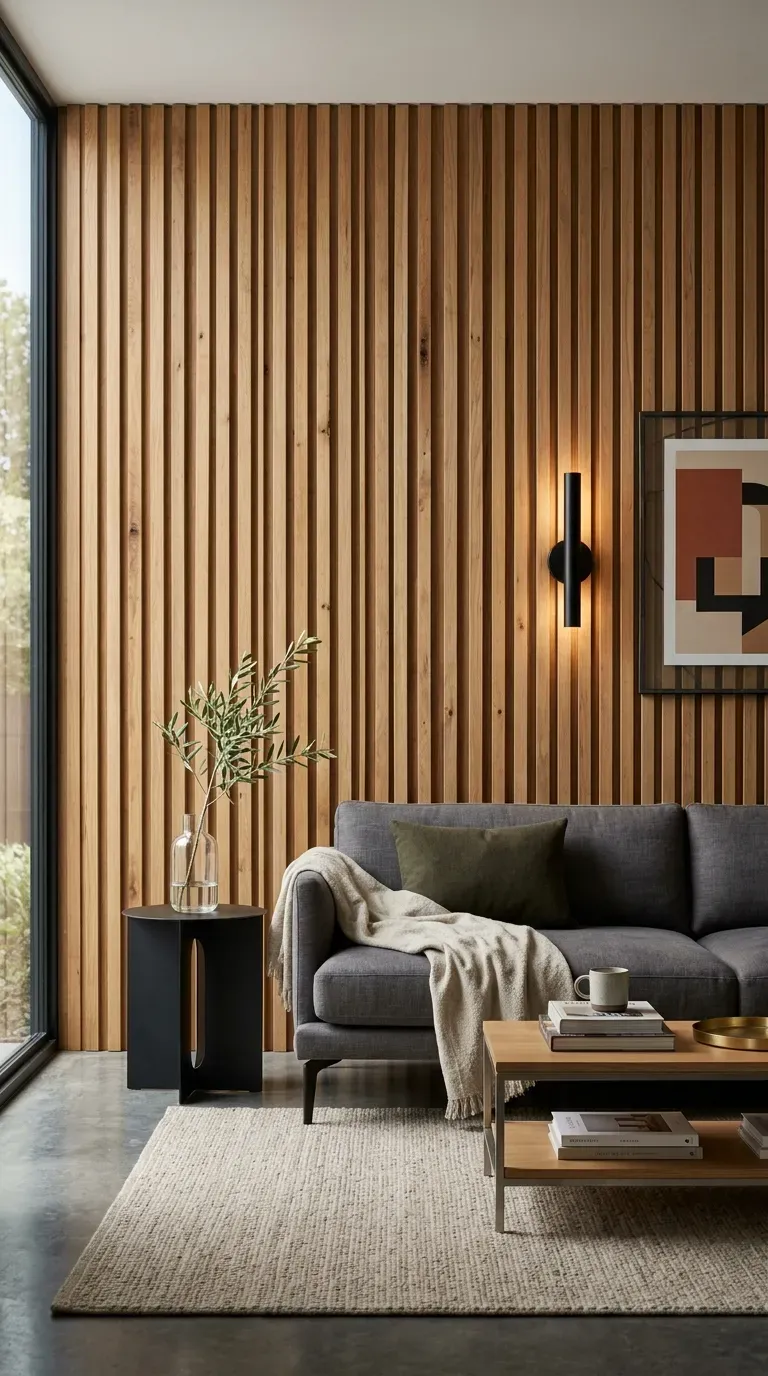
If you want to elevate a boring, flat room, installing vertical wood slat paneling is a brilliant DIY design project that pays massive dividends. This architectural addition acts as a subtle focal point behind a sofa or TV. If DIY isn’t your speed, hiring professional services to install bespoke acoustic paneling can give your home a high-end, custom-built atmosphere.
Why this idea works:
Vertical lines draw the eye upward, making ceilings appear taller. The repetition of the wooden slats provides a structured, orderly visual interest that aligns perfectly with minimalist principles.
5. Floating Media Consoles
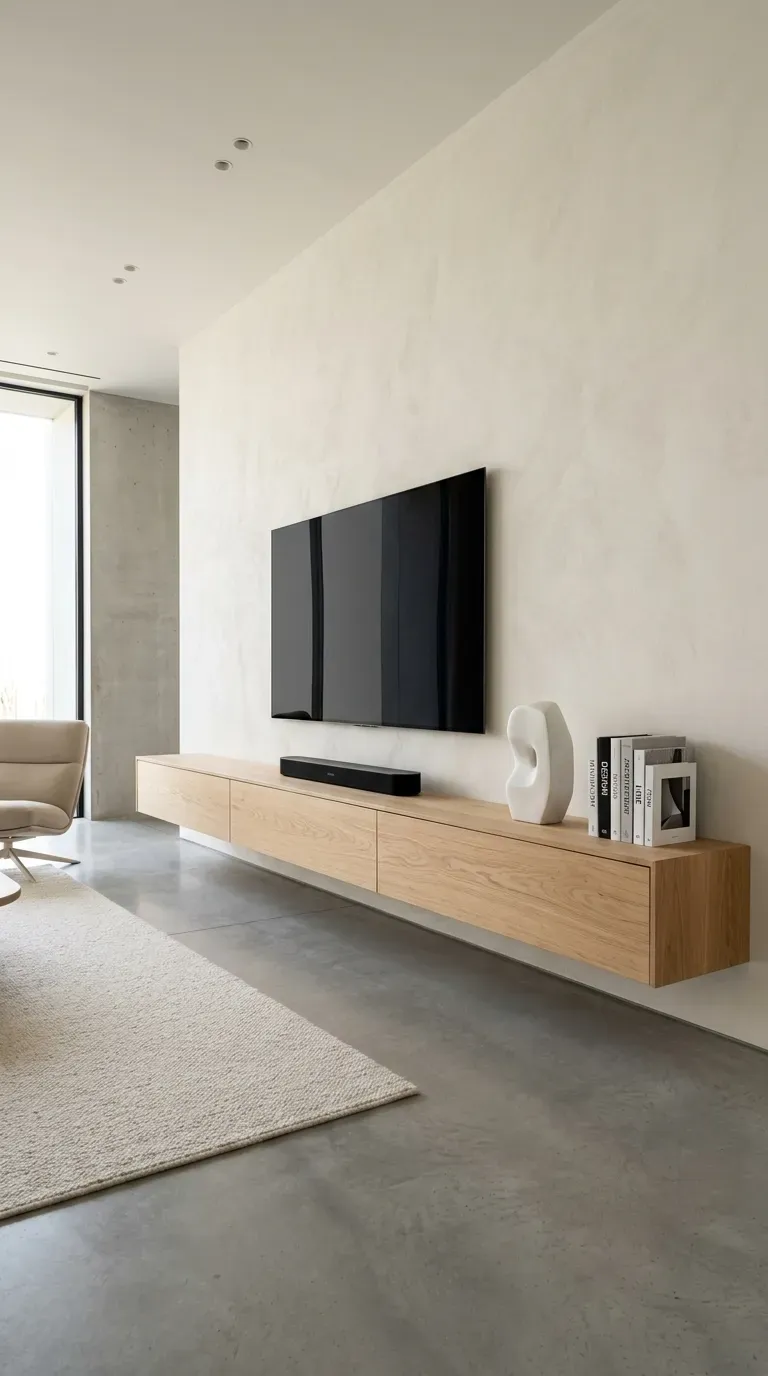
Ditch the heavy, floor-bound TV stands. A floating media console mounted directly to the wall opens up massive amounts of floor space. Following a step-by-step tutorial to mount one yourself allows you to perfectly hide all messy cords inside the wall, resulting in an ultra-clean, floating effect that feels incredibly modern.
Why this idea works:
By exposing the floor all the way to the baseboards, the room’s footprint appears continuous and expansive. The lack of visible hardware and cables eliminates visual noise.
6. Oversized Abstract Canvas Art
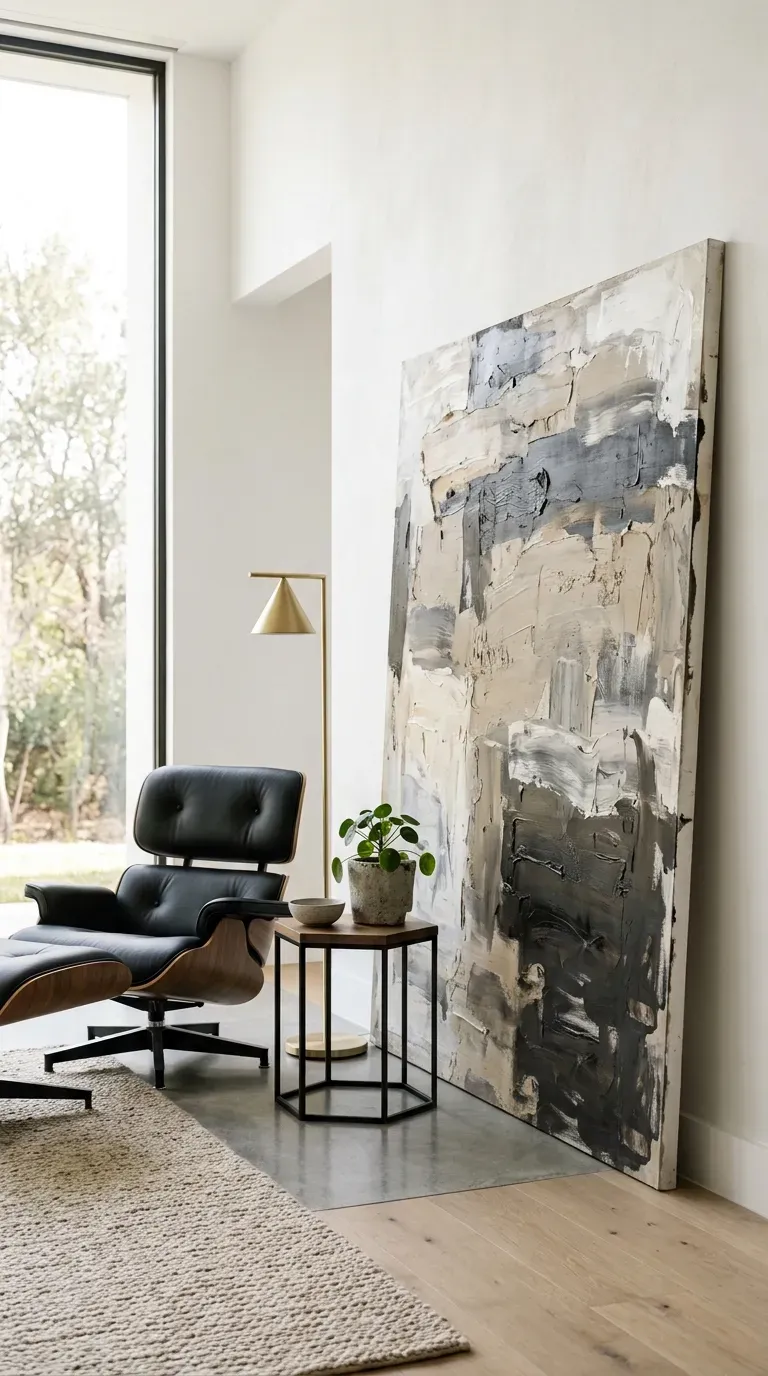
Instead of a cluttered gallery wall featuring dozens of small frames, opt for one massive, oversized abstract canvas. Sourcing large-scale original art or high-quality prints are excellent investment pieces that dictate the color palette and mood of the entire room without overwhelming the senses.
Why this idea works:
A single large focal point commands attention and simplifies the room’s decor scheme. It provides a massive injection of personality and sophistication while adhering to the “less is more” philosophy.
7. Sculptural Accent Lighting
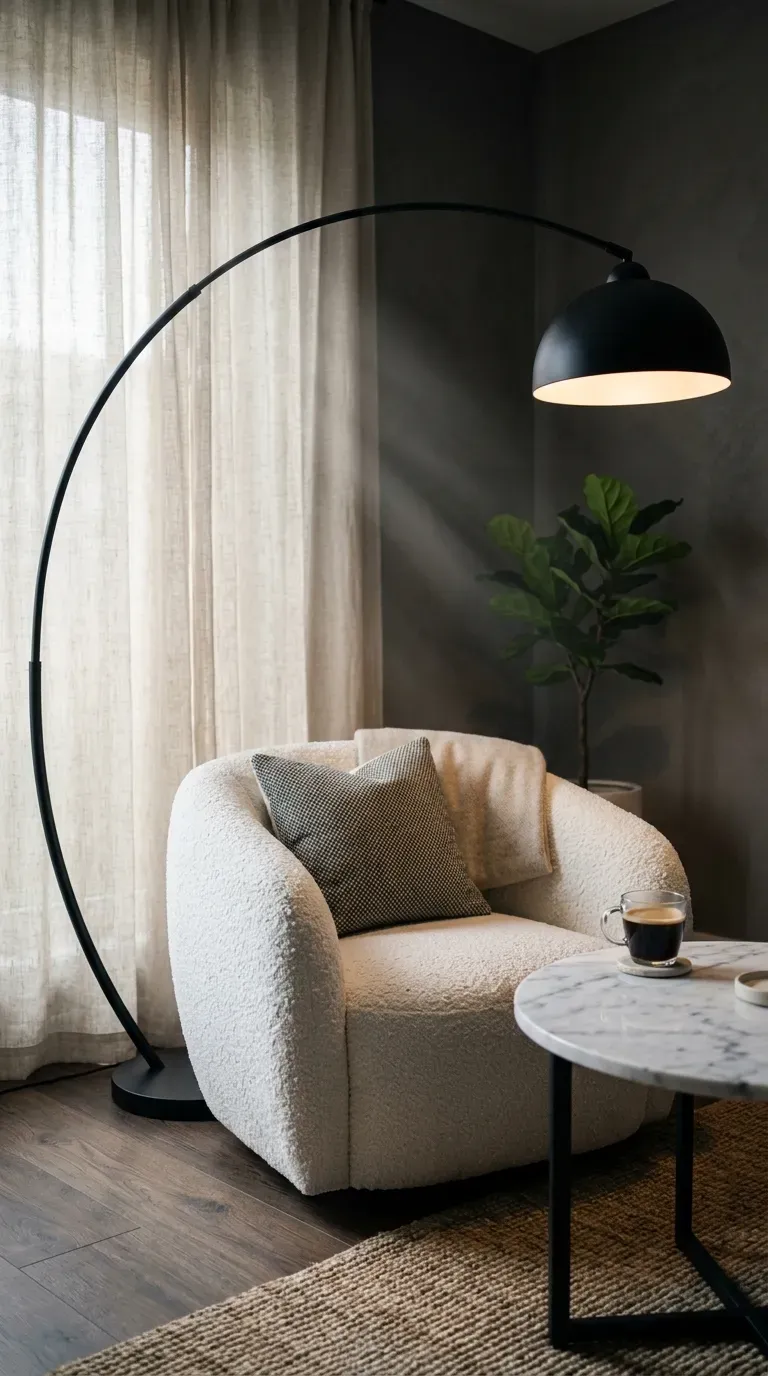
In a minimalist layout, functional items must double as art. Swap out generic fixtures for striking, sculptural accent lighting. Whether it’s a sweeping arc floor lamp or an angular matte black pendant, consulting a premium lighting buying guide can help you find fixtures that serve as striking silhouettes against bare walls.
Why this idea works:
Sculptural lighting introduces dynamic shapes and curves into a space that is often dominated by the rigid, straight lines of modern furniture, creating perfect visual balance.
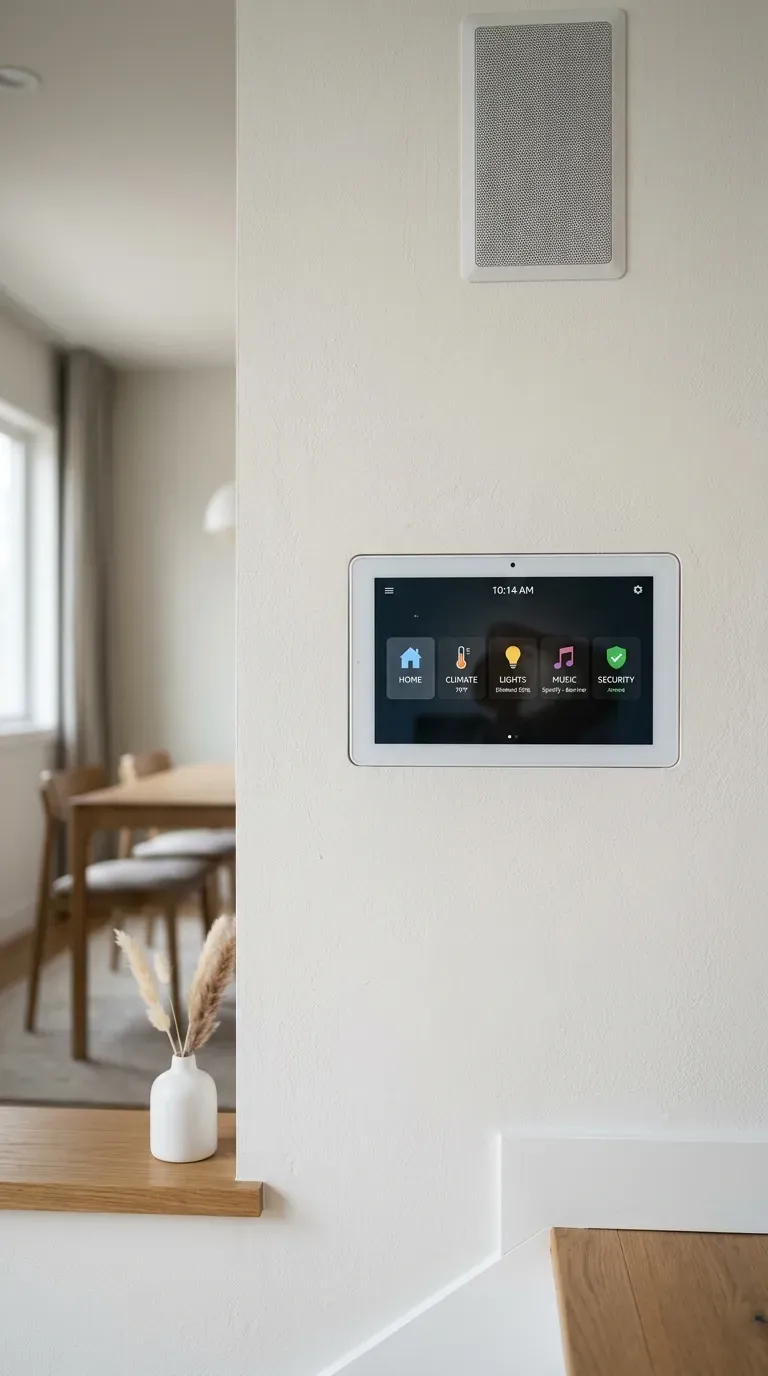
8. Integrated Smart Home Tech
Visible thermostats, bulky speakers, and tangled charging cables ruin a minimalist vibe. Utilizing smart home software tools and recessed tech ecosystems allows you to control lighting, climate, and audio invisibly. Upgrading to flush-mounted, paint-matched smart switches is a high-impact detail that modernizes your home instantly.
Why this idea works:
It removes the visual clutter of traditional electronics and wall acne. The technology blends seamlessly into the architecture, maintaining the pristine aesthetic of the walls and surfaces.
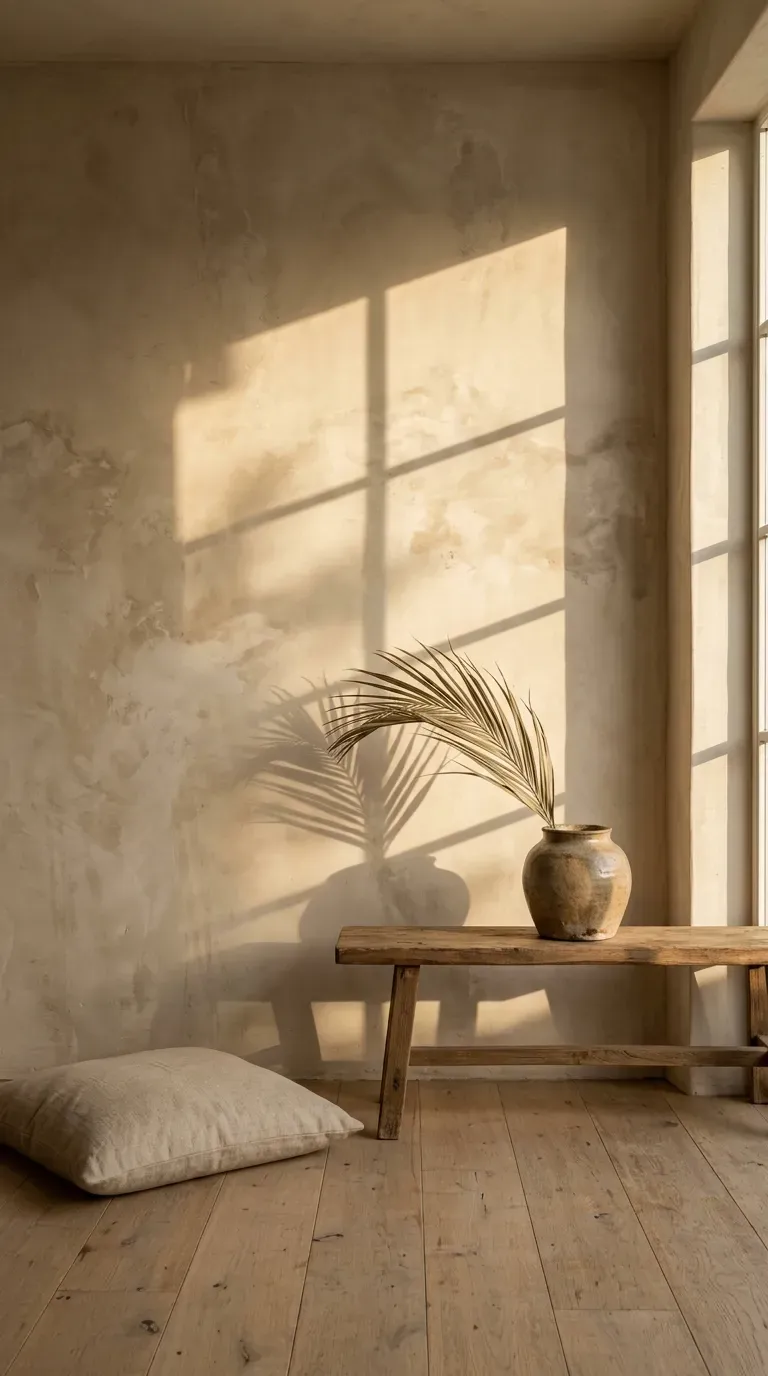
9. Natural Limewash Walls
For an incredibly engaging DIY design project, consider applying limewash paint to your living room walls. This ancient technique creates a matte, suede-like finish with subtle, cloudy movement. It is a fantastic way to introduce character and warmth to a room without resorting to wallpaper or bold paint colors.
Why this idea works:
Limewash adds an organic, earthy texture that prevents white or beige walls from looking flat and sterile. The subtle variations in the finish play beautifully with natural light throughout the day.
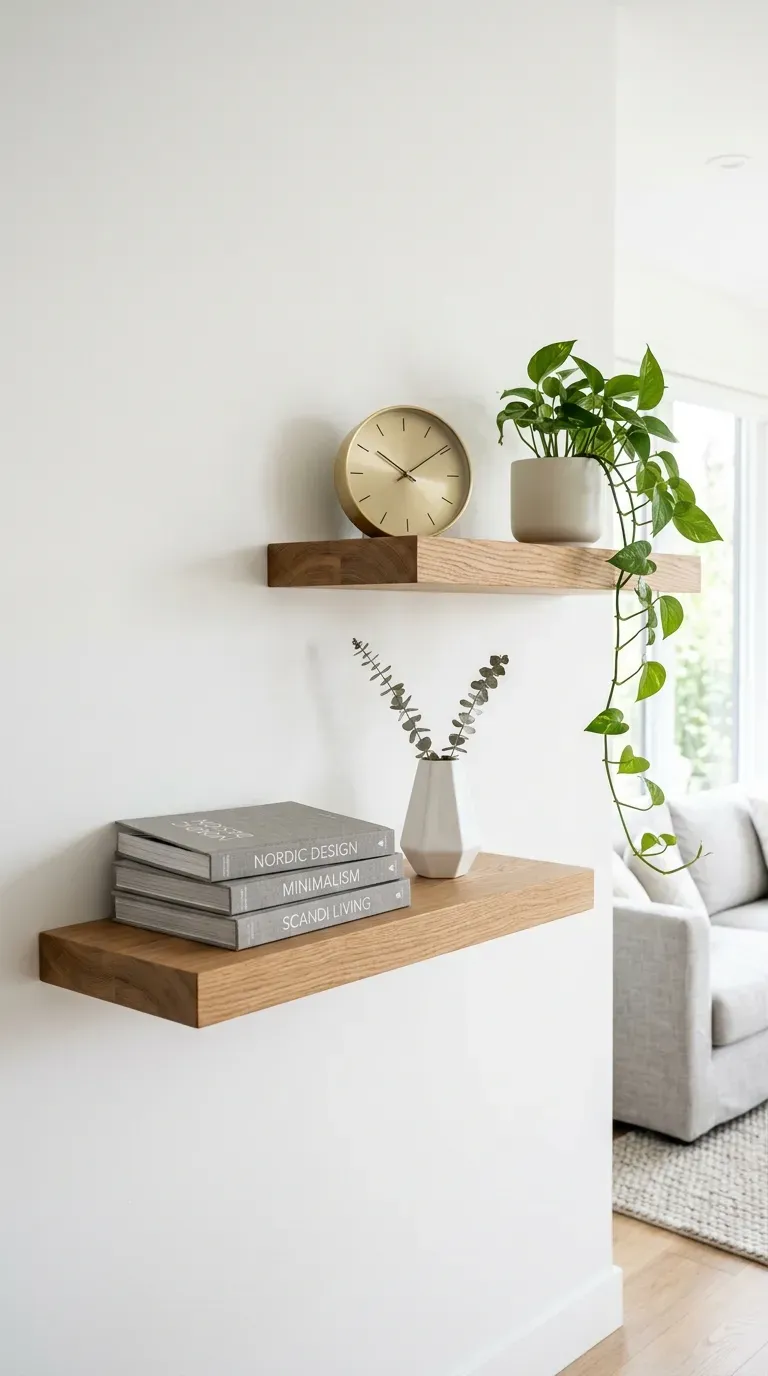
10. Curated Floating Shelves
Instead of massive, imposing bookcases, install two or three sleek floating shelves. The secret to interior styling here is extreme curation. Display only a few favorite items—a piece of pottery, a trailing plant, and a stack of three tonal books. Allow for plenty of “negative space” between objects.
Why this idea works:
Floating shelves provide a place for personal expression without the heavy visual weight of traditional cabinetry. The negative space allows the eye to rest and highlights the beauty of each individual object.
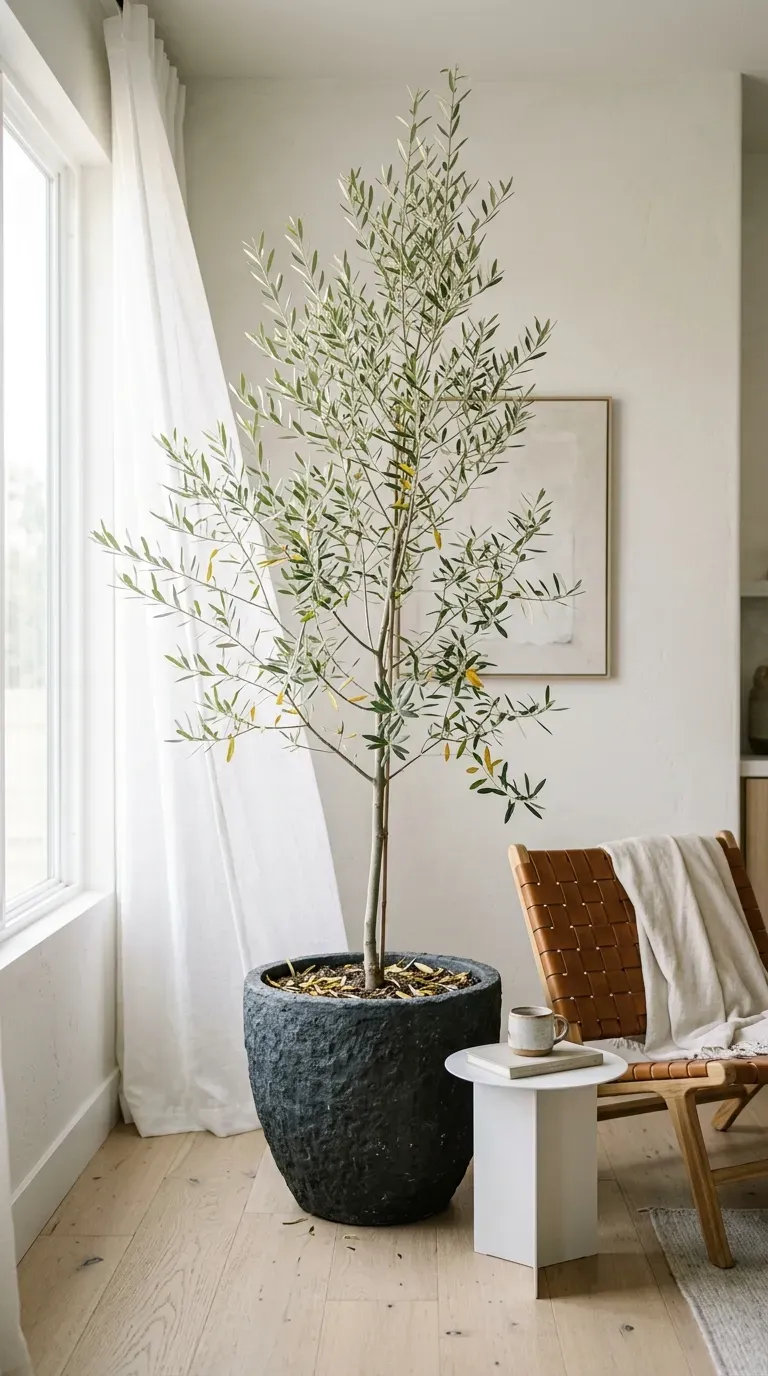
11. Strategic Indoor Trees
Every minimalist space needs a touch of life to prevent it from feeling clinical. Investing in a large, sculptural indoor tree—like an Olive Tree, a Ficus Audrey, or a Black Olive—brings organic shapes indoors. When comparing budget vs. luxury options, a high-quality, large-scale ceramic planter is just as important as the plant itself.
Why this idea works:
Nature is inherently calming. A large, solitary plant acts as a living sculpture, bringing a pop of vibrant color and softening the hard architectural lines of the room.
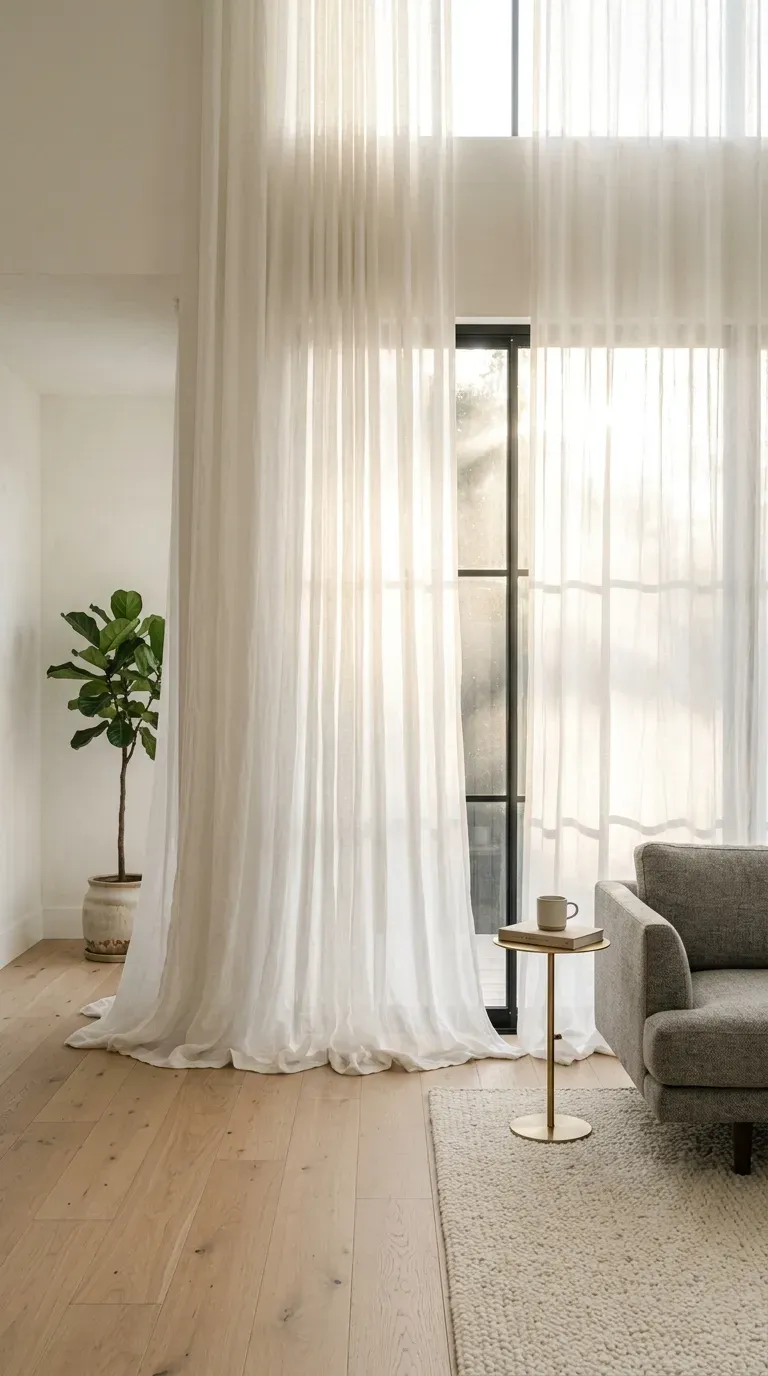
12. Floor-to-Ceiling Linen Curtains
Window treatments can make or break a room’s aesthetic. For a truly elevated look, hang your curtain rods as high and wide as possible, and opt for premium materials like 100% European flax linen. The fabric should gently “kiss” the floor, creating continuous vertical lines that soften the space beautifully.
Why this idea works:
Mounting curtains high creates the optical illusion of much taller ceilings and grander windows. The natural, unlined linen filters harsh light into a soft, romantic glow while maintaining a tailored look.
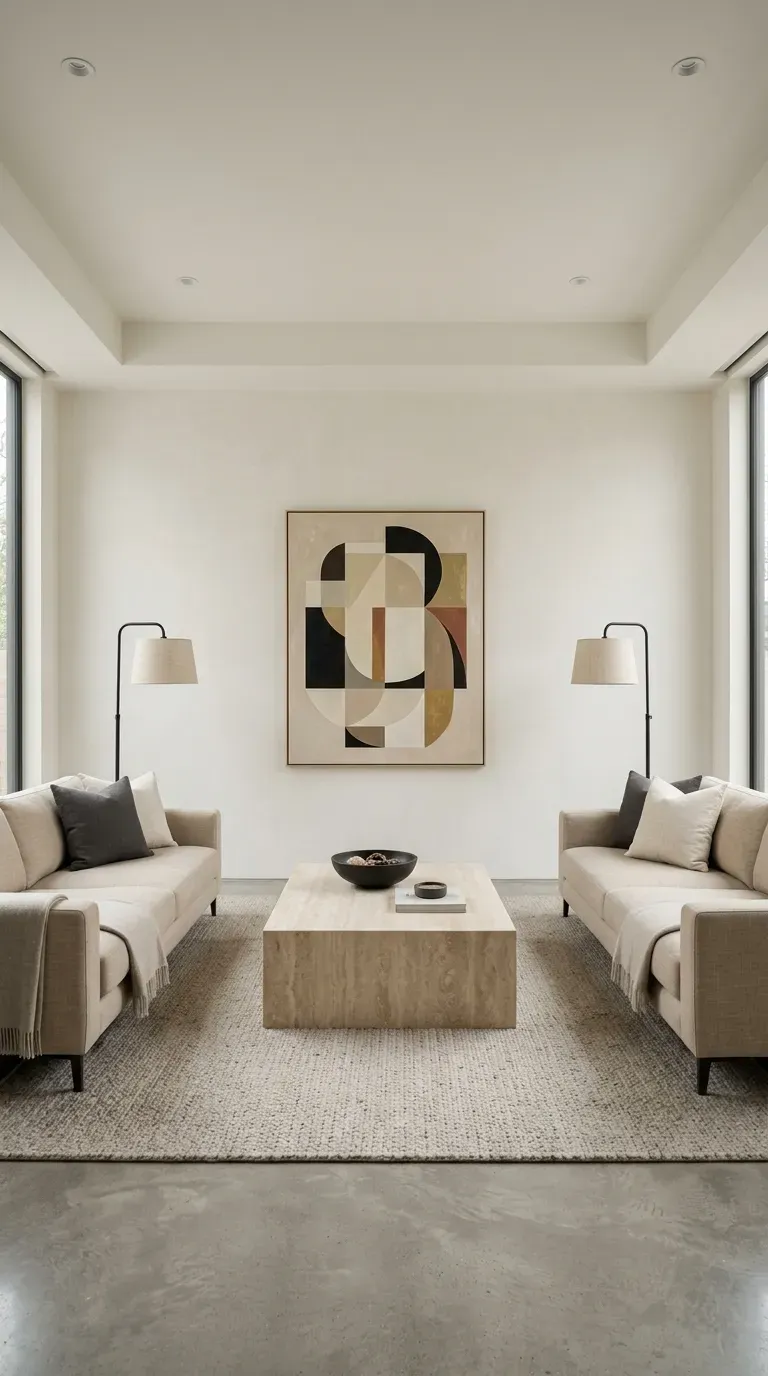
13. The Symmetrical Seating Layout
Good interior design relies heavily on smart room layouts. If you want to instantly calm the energy of a room, arrange your seating symmetrically. Placing two identical accent chairs facing a sofa, or two matching sofas facing each other, creates an environment that feels orderly, intentional, and perfect for conversation.
Why this idea works:
The human brain loves symmetry; it processes it as aesthetically pleasing and safe. A symmetrical layout brings a profound sense of balance and formality to even the most casual minimalist spaces.
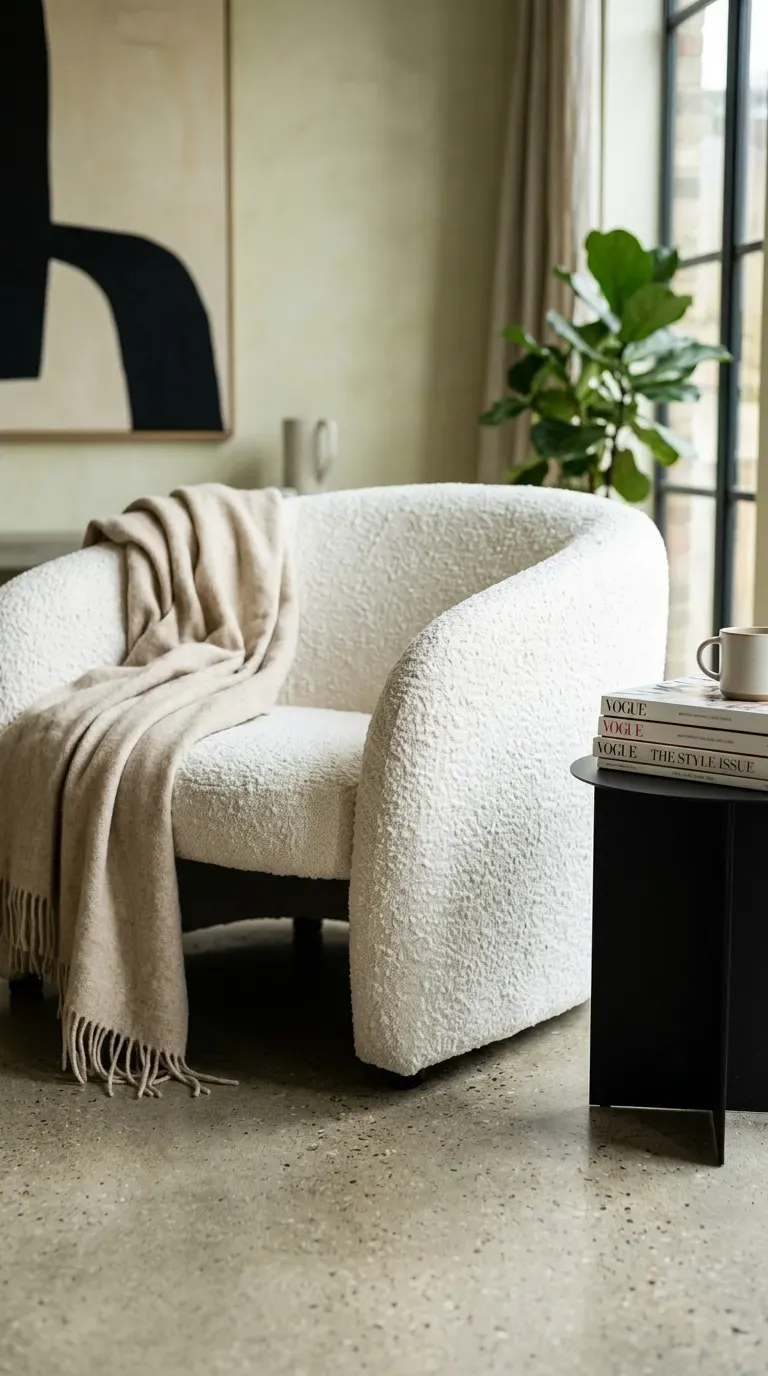
14. Textured Boucle Accent Chairs
To prevent a minimalist room from feeling flat, you must layer different tactile experiences. Investing in an accent chair made from boucle fabric introduces a chunky, nubby texture that instantly elevates the cozy factor. These are fantastic investment pieces that act as functional modern art.
Why this idea works:
Boucle fabric plays beautifully with light, creating tiny shadows across its nubby surface. This adds visual weight and warmth without needing to rely on loud patterns or saturated colors.
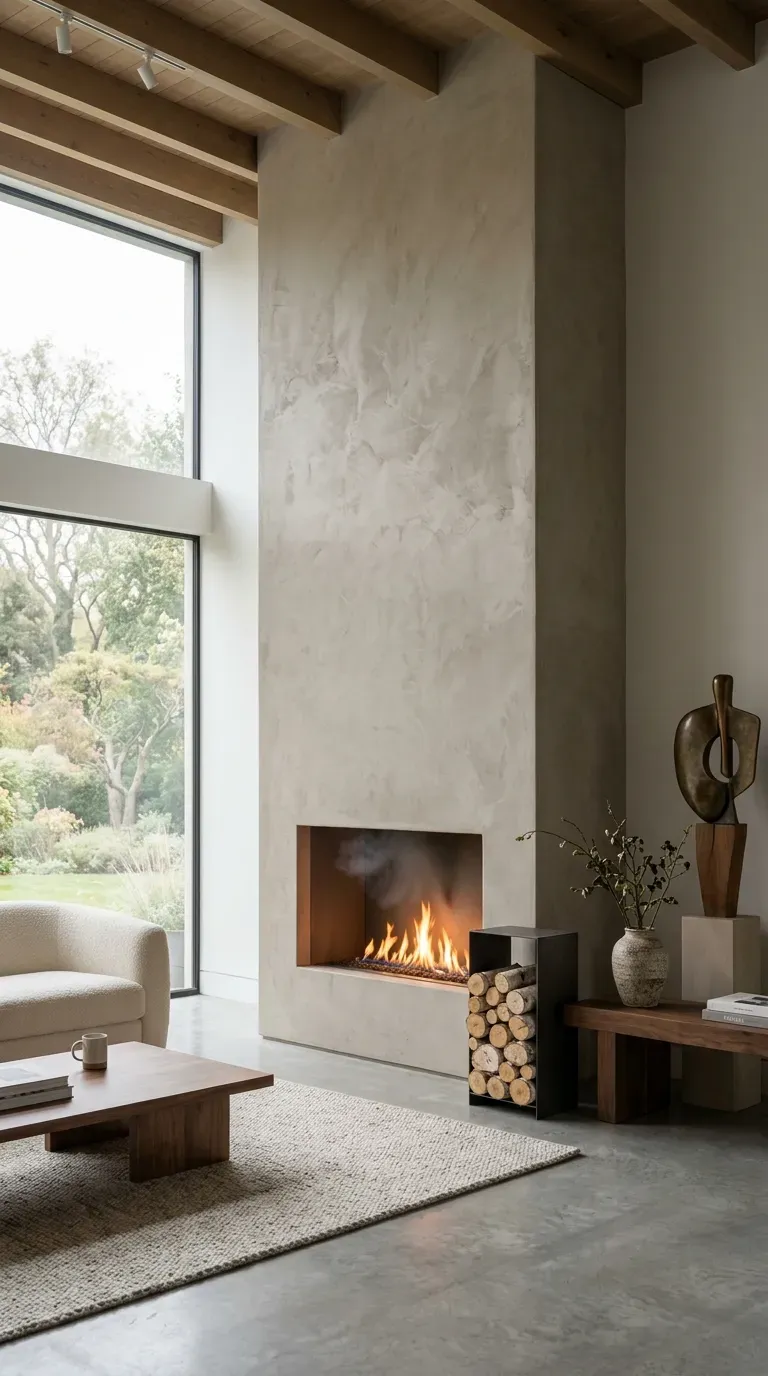
15. The Minimalist Fireplace Makeover
If your living room has an outdated, clunky fireplace, it can ruin a minimalist vibe. Stripping it down and applying a smooth Roman clay finish, or hiring professional services to re-face it in large format, seamless porcelain slabs, creates a stunning, monolithic focal point that commands the room.
Why this idea works:
By removing traditional mantels, ornate tiles, and busy grout lines, the fireplace becomes a sweeping, architectural feature. It feels modern, clean, and acts as a powerful anchor for the room.
16. Clutter-Free Coffee Table Styling
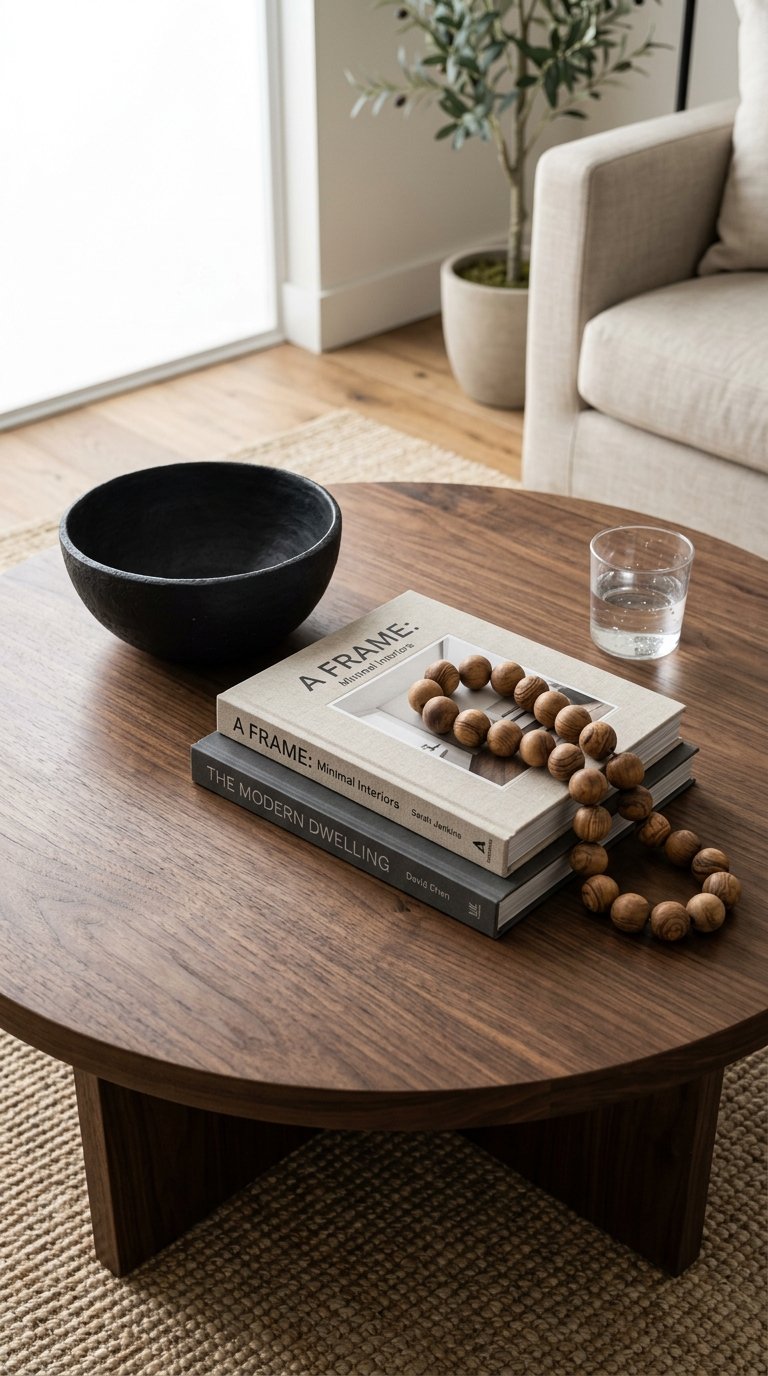
The final touch to any minimalist room is mastering surface styling. Rather than piling your coffee table high with knick-knacks, curate it with just three intentional items. A beautiful tray, a design book, and a natural element (like wood beads or a single branch) are the only must-have equipment you need for a stunning centerpiece.
Why this idea works:
Applying the “rule of three” ensures the table looks styled rather than messy. Leaving plenty of exposed surface area keeps the room feeling airy, spacious, and meticulously maintained.
Conclusion: Crafting Your Minimalist Sanctuary
Creating a breathtaking minimalist living room isn’t about throwing everything away; it is about highly intentional curation. Whether you decide to tackle a slat-wall DIY design project or finally splurge on that premium statement sofa, every choice should bring you closer to a space that feels utterly peaceful. Remember that editing your room layout is a continuous journey—start by removing the visual noise and slowly layer back in pieces that offer supreme texture, function, and joy.
Ready to transform your space? Pin this article to your favorite Home Decor or Living Room Layouts board right now so you have all these expert ideas and styling prompts ready for your next weekend project!