
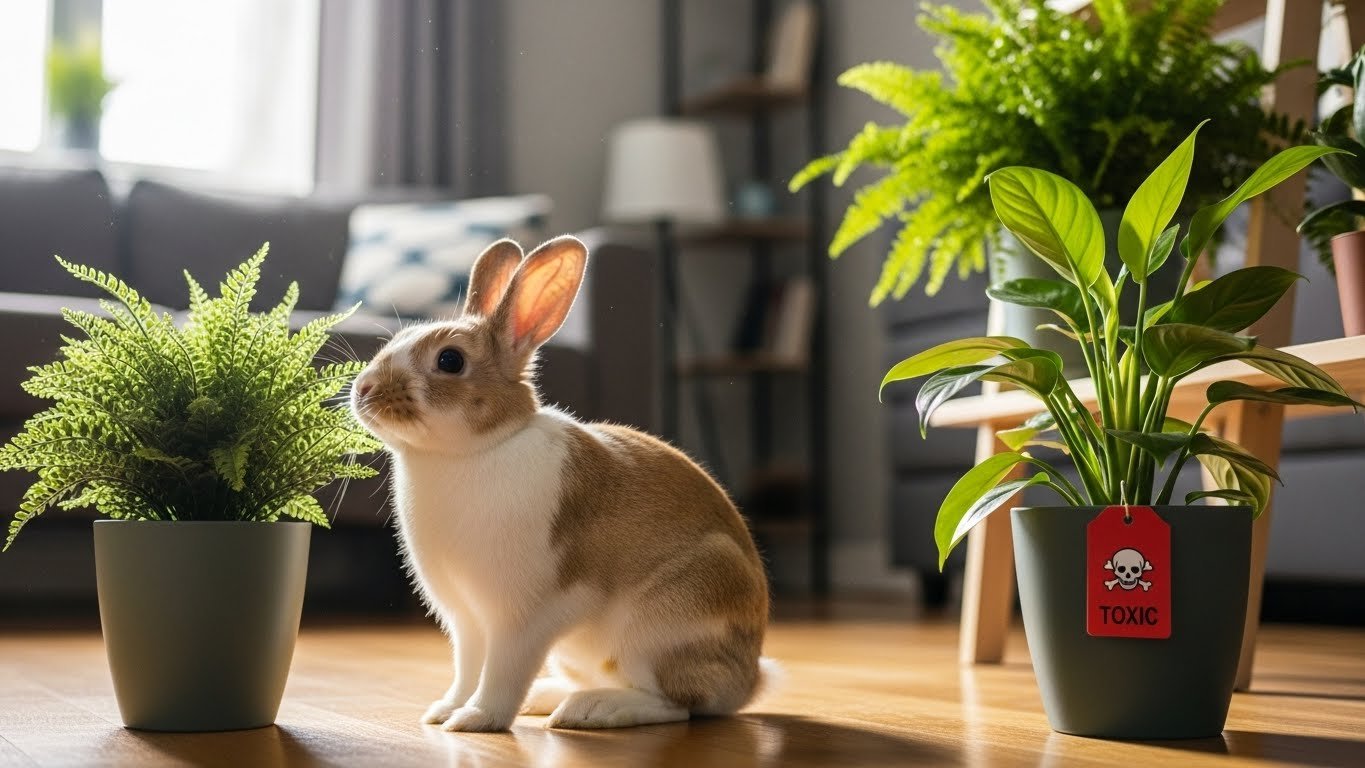
Rabbits are naturally curious and love to nibble, which is part of what makes them such delightful pets—but it’s also what puts them at risk around certain plants. Many common houseplants and garden favorites are toxic plants for rabbits, even in small amounts.
This guide is written from hands-on experience caring for indoor rabbits and helping new bunny owners create safer homes. Every plant listed here has caused real health issues in pet rabbits, according to veterinarians and long-term rabbit caregivers. Knowing what to avoid can prevent emergency vet visits and give peace of mind.
1. Lilies (Extremely Dangerous)
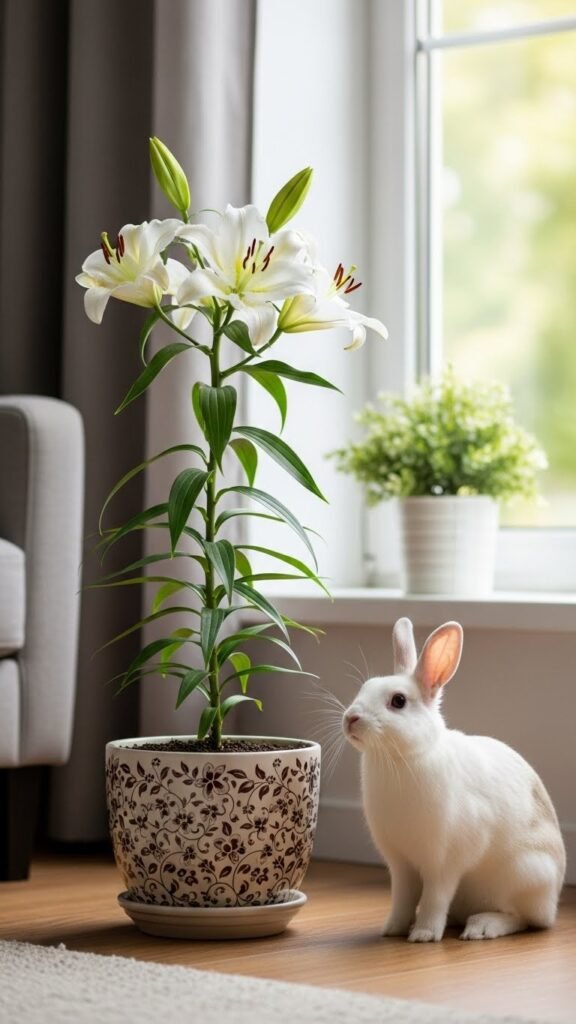
Lilies are beautiful but highly toxic plants for rabbits. Even a small nibble of the leaf, stem, or pollen can cause serious digestive distress and organ damage.
Many rabbit owners don’t realize lilies are often included in bouquets. In one real-life case, a bunny showed signs of lethargy and appetite loss within hours of chewing a fallen leaf.
Expert tip: If fresh flowers are kept at home, floristry-grade plant stands and covered vases (commonly used by rabbit owners and reviewed positively on Amazon) can help keep toxic flowers completely out of reach.
2. Aloe Vera
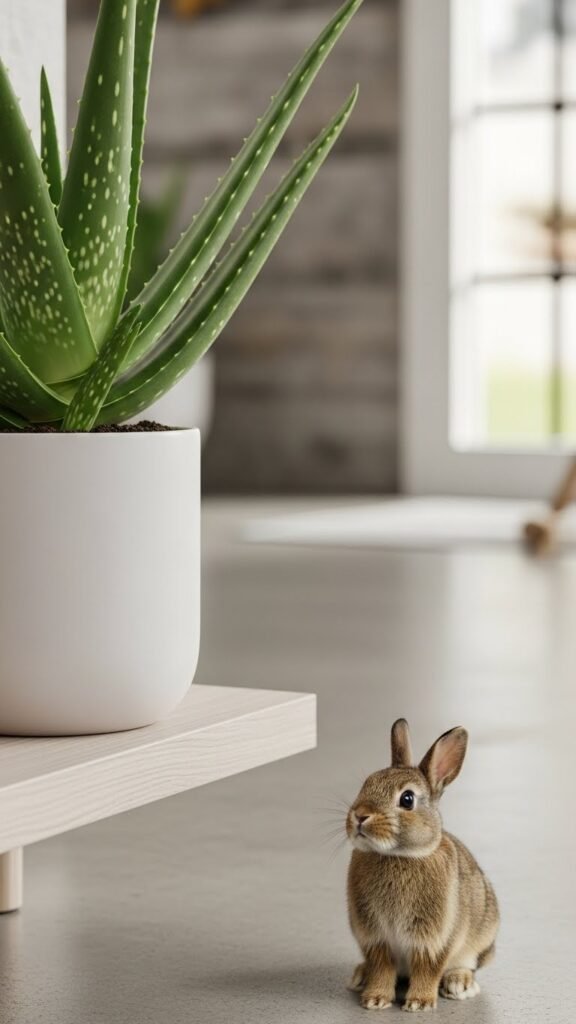
Aloe vera is often praised for its health benefits for humans. For rabbits, it’s the opposite.
Aloe contains compounds that can cause severe diarrhea, dehydration, and stomach pain in rabbits. It’s one of the most commonly mistaken “safe” plants.
Experienced bunny owners who switched aloe to high, enclosed shelving or replaced it entirely with rabbit-safe greenery noticed fewer tummy upsets in free-roam rabbits.
3. Ivy (English Ivy & Similar Varieties)
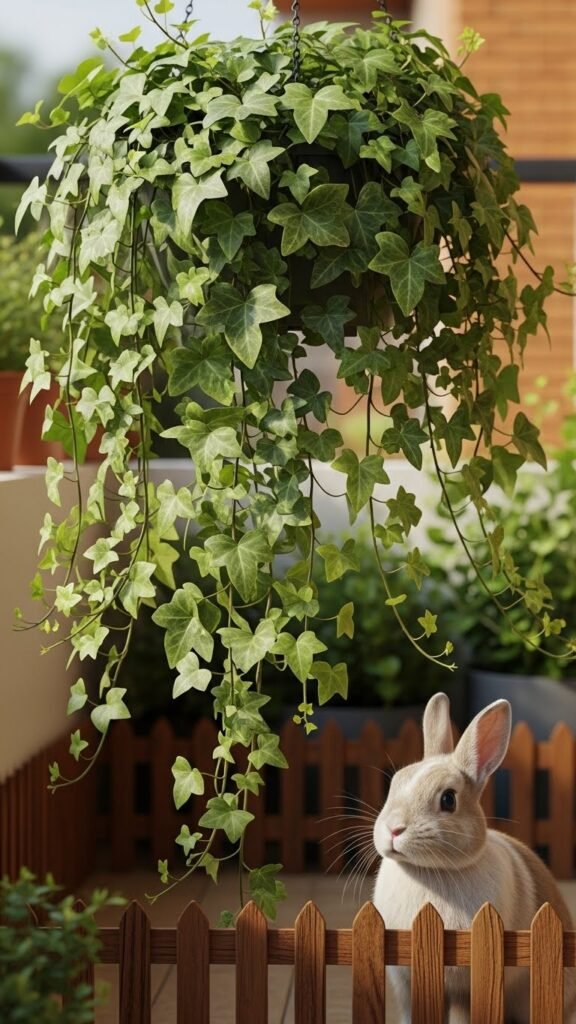
Ivy is frequently used in hanging baskets and outdoor gardens, but it’s a toxic plant for rabbits that can irritate the mouth and digestive tract.
Rabbits that chew ivy may drool excessively or refuse food afterward. Garden-proof fencing and elevated planters—often used by rabbit owners who garden safely are simple solutions that have proven effective in real homes.
4. Tulips
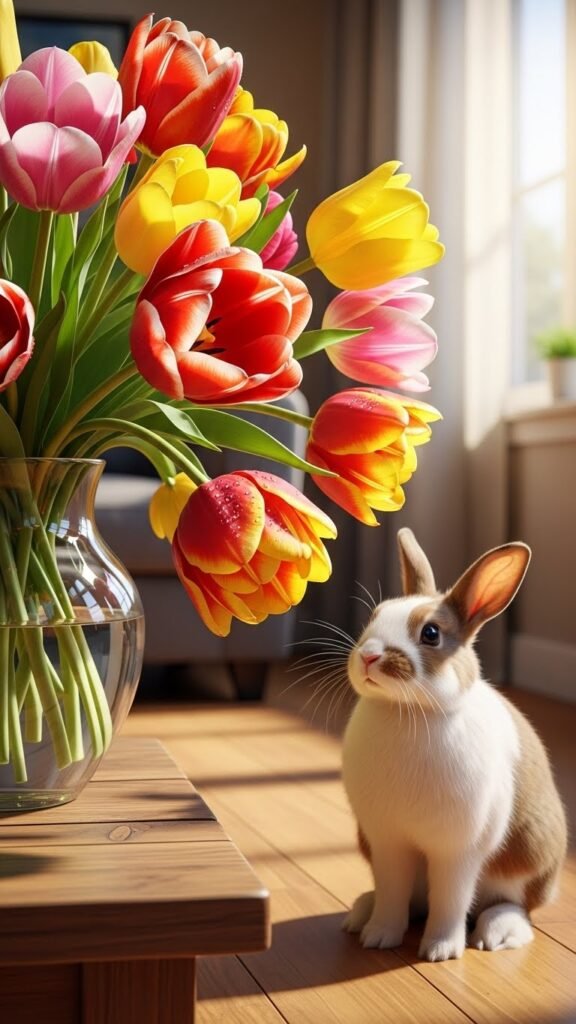
Tulips, especially the bulbs, are dangerous for rabbits. The bulbs contain toxins that can cause drooling, diarrhea, and loss of appetite.
One experienced rabbit caretaker shared that even dried tulip petals brought indoors during spring cleaning caused mild symptoms when a rabbit found them.
Using secure bulb storage containers and keeping spring flowers well away from rabbit areas is a common best practice among long-time bunny owners.
5. Daffodils
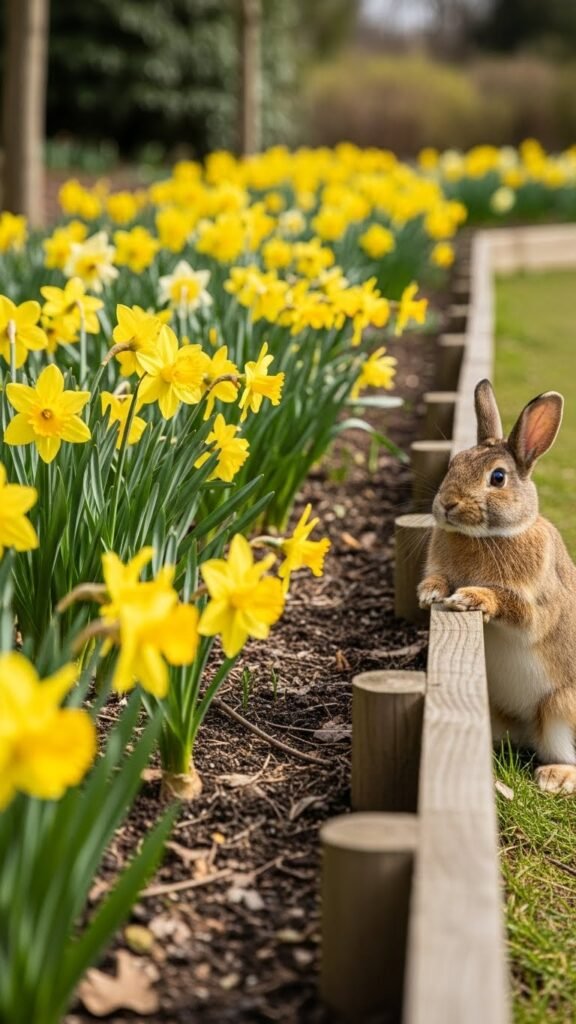
Daffodils are another spring favorite that are toxic to rabbits, particularly the bulbs.
Veterinary guidance confirms that ingestion can lead to stomach pain and weakness. Rabbit owners who switched to raised, enclosed garden beds (widely recommended in rabbit care communities and available through trusted retailers) found it much easier to keep rabbits safe outdoors.
6. Dieffenbachia (Dumb Cane)
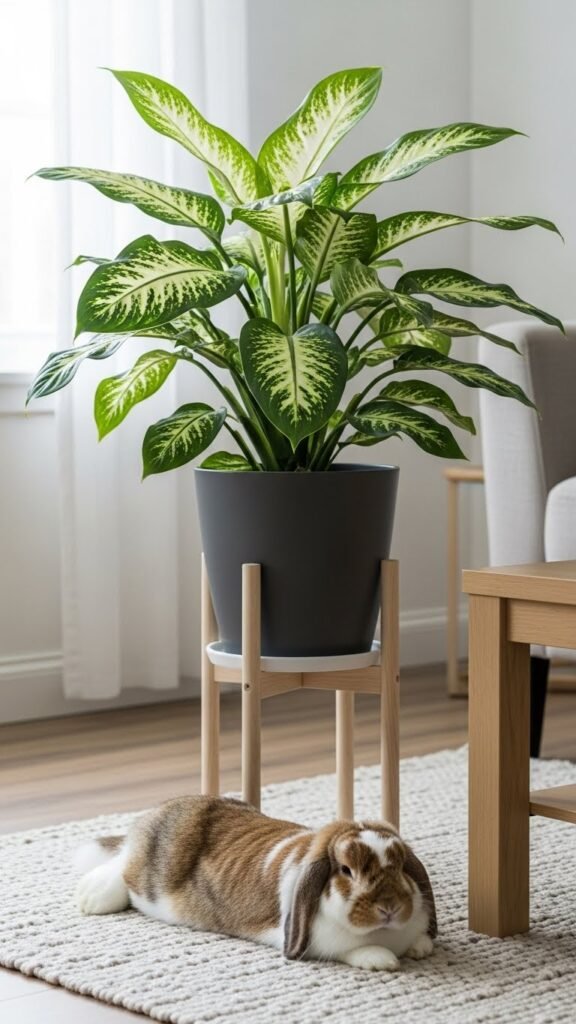
This popular houseplant is especially harmful. It contains calcium oxalate crystals that can cause intense mouth pain, swelling, and difficulty swallowing.
Many rabbit owners report discovering the danger only after their rabbit showed sudden drooling or pawing at the mouth. After removing Dieffenbachia entirely, symptoms often resolved quickly with vet guidance.
Plant cabinets with ventilation commonly used by pet owners with free-roam rabbits—are a safer alternative if decorative plants are desired.
7. Foxglove
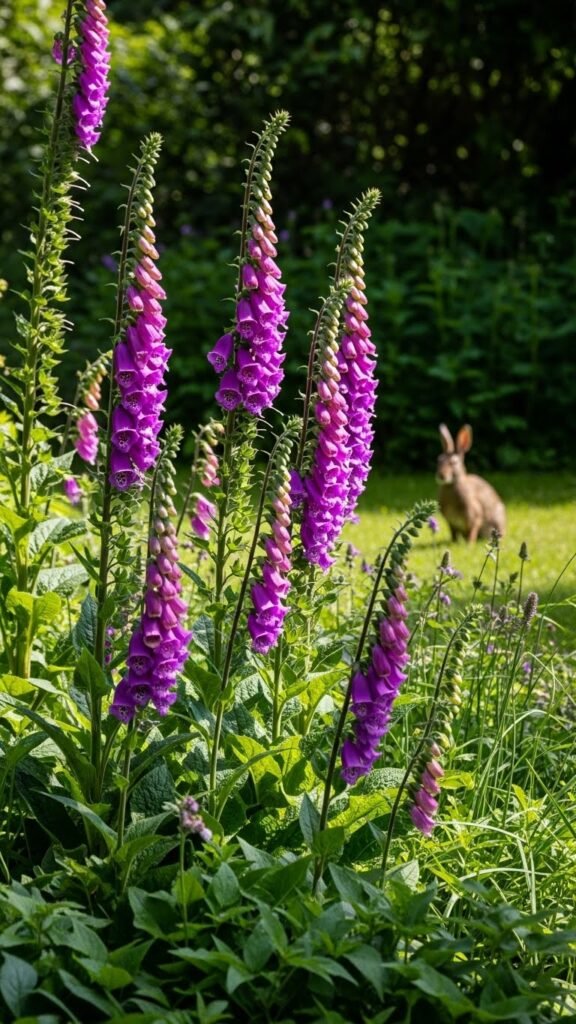
Foxglove is one of the most dangerous toxic plants for rabbits, affecting the heart and nervous system.
Even outdoor exposure is risky. Gardeners who keep rabbits often choose fully rabbit-proof garden fencing or switch to exclusively rabbit-friendly garden plants to avoid this risk altogether.
How to Keep Rabbits Safe From Toxic Plants
Experienced rabbit owners agree on a few simple rules:
- Remove toxic plants completely whenever possible
- Use elevated shelving or enclosed plant stands for human-only plants
- Choose rabbit-friendly plants for indoor and outdoor spaces
- Always supervise rabbits in new environments
These small changes, tested in real rabbit households, significantly reduce risk.
When to Call a Vet
If a rabbit shows:
- Sudden loss of appetite
- Diarrhea
- Drooling or mouth irritation
- Lethargy
It’s critical to contact a rabbit-savvy veterinarian immediately. Early action can save a rabbit’s life.
Final Thoughts
Understanding toxic plants for rabbits is a key part of responsible bunny care. While plants bring beauty to a home, a rabbit’s safety always comes first. With thoughtful plant choices and smart home setups, it’s completely possible to enjoy both greenery and a healthy, happy rabbit.