
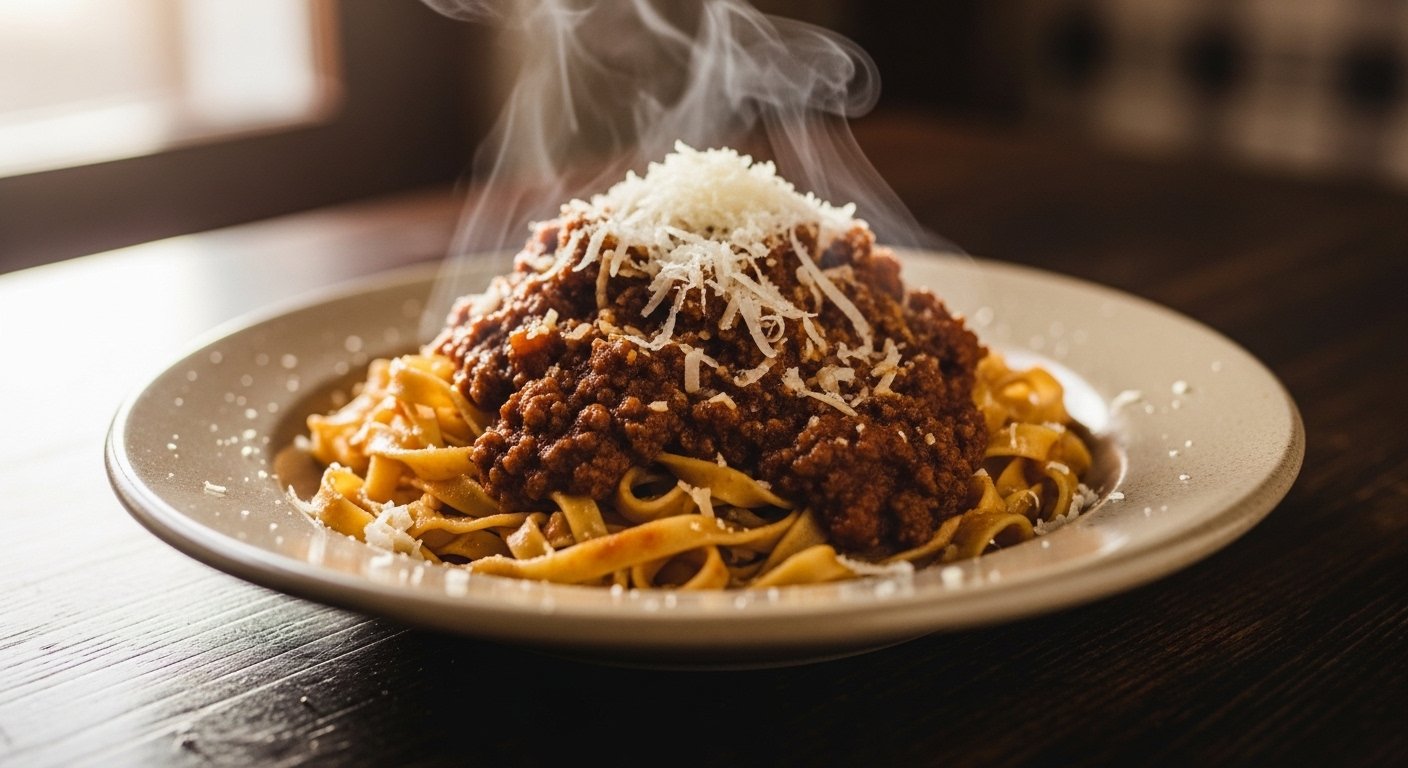
There’s Bolognese… and then there’s real Italian Ragù alla Bolognese.
The authentic version is nothing like the quick tomato-heavy sauces often seen outside Italy. True ragù from Bologna is slow-cooked, gently layered with flavor, and beautifully balanced. It’s meat-forward, silky, and deeply comforting the kind of sauce that fills the kitchen with warmth for hours.
After many test batches adjusting simmer time, milk ratios, and tomato balance this version delivers what traditional Italian cooks aim for: richness without heaviness and depth without overpowering acidity.
This is not a rushed recipe. It’s a patient one. And that’s exactly why it’s special.
Authentic Ragù alla Bolognese Recipe
Serves: 4–6
Total Time: About 3 hours
Ingredients
- 2 tablespoons extra virgin olive oil
- 2 tablespoons unsalted butter
- 1 small onion, very finely chopped
- 1 small carrot, very finely chopped
- 1 celery stalk, very finely chopped
- 400g (14 oz) ground beef (preferably 80/20)
- 150g (5 oz) ground pork
- ½ cup dry white wine
- 1 cup whole milk
- 1 cup crushed tomatoes or passata
- 1 tablespoon tomato paste
- 1 cup beef broth (as needed during cooking)
- Salt and freshly ground black pepper
Optional (traditional variation):
- A pinch of freshly grated nutmeg
Step-by-Step Method
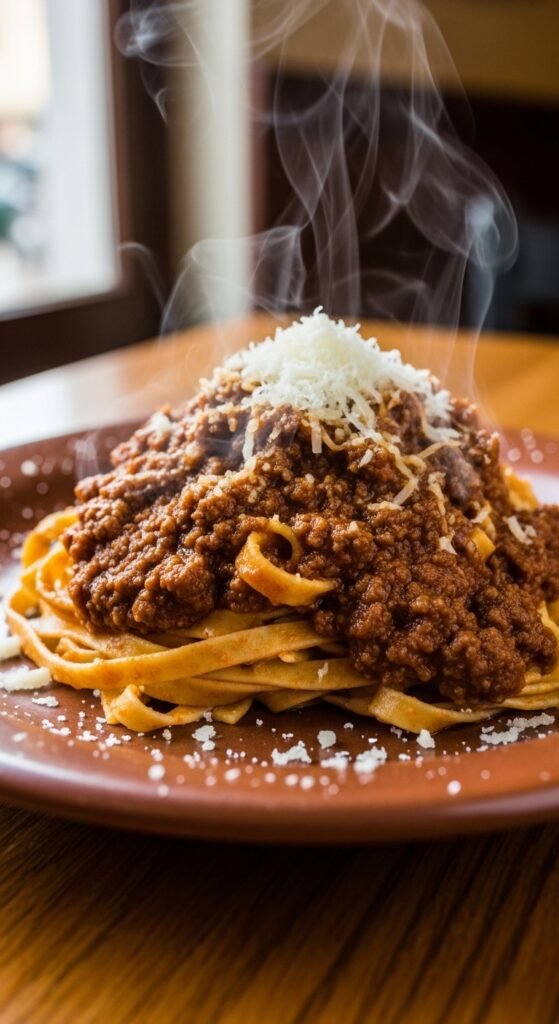
1. Build the Flavor Base (Soffritto)
In a heavy-bottom pot or Dutch oven, heat olive oil and butter over medium-low heat.
Add the finely chopped onion, carrot, and celery. Cook slowly for 8–10 minutes until soft and translucent — not browned.
This vegetable base is called soffritto, and it forms the backbone of authentic Italian ragù.
2. Brown the Meat Properly
Increase heat slightly. Add ground beef and pork.
Break the meat apart slowly and cook until fully browned and moisture evaporates. Take your time here — about 10–12 minutes.
Proper browning develops deep flavor.
Season lightly with salt and pepper.
3. Deglaze with Wine
Pour in the white wine.
Let it simmer until fully evaporated. The alcohol cooks off, leaving behind subtle acidity and depth.
Do not rush this step — the liquid should almost disappear.
4. Add the Milk (The Traditional Secret)
Pour in the milk and reduce heat to low.
Let it simmer gently until mostly absorbed (about 10–15 minutes).
Milk softens the acidity of tomatoes and makes the meat tender — this is one of the defining characteristics of authentic ragù from Bologna.
5. Add Tomatoes Sparingly
Stir in crushed tomatoes and tomato paste.
Authentic ragù is not a tomato sauce with meat — it’s a meat sauce with a touch of tomato.
Add just enough broth to barely cover the mixture.
6. Slow Simmer (The Magic Happens Here)
Reduce heat to the lowest setting.
Partially cover and let simmer very gently for 2 to 2½ hours.
Stir occasionally. If it becomes too thick, add a small splash of broth.
By the end, the sauce should look rich, thick, and deeply browned — not bright red.
The Perfect Texture
Authentic Bolognese ragù should be:
- Thick and silky
- Mostly meat with minimal visible tomato
- Creamy but not heavy
- Deeply savory
If it looks like a standard tomato sauce, it needs more simmering.
How Italians Traditionally Serve It
In Italy, ragù is never served with spaghetti.
It is traditionally paired with:
- Tagliatelle
- Pappardelle
- Used in lasagna
The wide noodles help hold the rich sauce.
Toss hot pasta directly into the ragù before serving for best results.
Finish with freshly grated Parmigiano Reggiano.
Common Mistakes to Avoid
Using too much tomato – It changes the identity of the dish.
Skipping the milk step – This affects authenticity and texture.
Cooking too quickly – Ragù needs time.
Using lean meat only – Some fat is essential for richness.
Storage Tips
- Refrigerate up to 4 days
- Freeze up to 3 months
- Flavor improves the next day
Ragù is one of those sauces that tastes even better after resting.
Final Thoughts
True Italian Bolognese ragù is about patience and balance. It’s not flashy. It’s not overly seasoned. It’s steady, slow, and deeply satisfying.
Once you make it the traditional way — layered with soffritto, wine, milk, and a long simmer — it becomes clear why this sauce from Bologna is treasured around the world.
This is comfort food at its most authentic.