
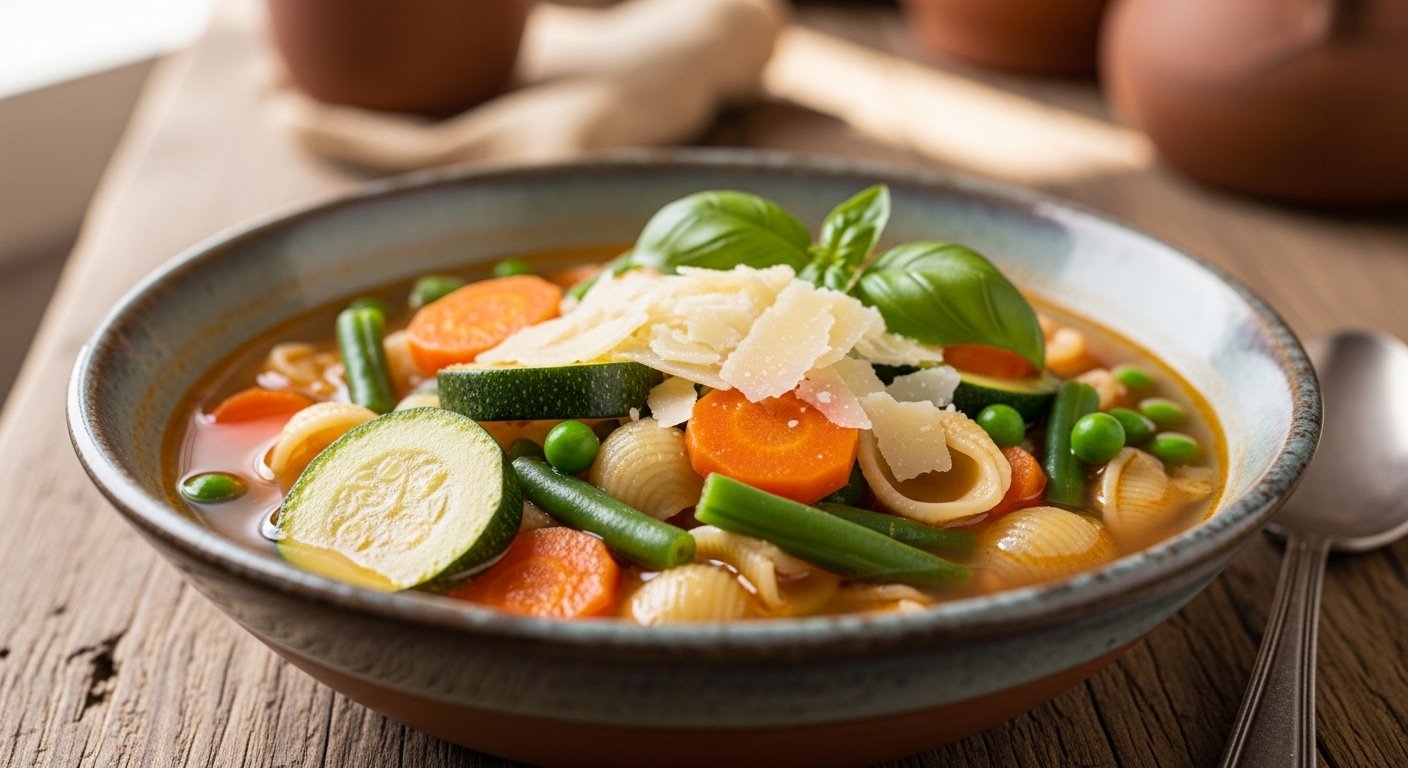
When most people hear “minestrone,” they imagine a heavy winter soup. But Minestrone Primavera is completely different.
This version celebrates spring and summer vegetables light, vibrant, and full of fresh flavor. It’s colorful, nourishing, and beautifully simple. Instead of long simmering for deep winter richness, this soup highlights crisp-tender vegetables and bright herbs.
In Italian cooking, primavera means “spring,” and that’s exactly what this dish tastes like fresh produce, delicate broth, and a clean finish.
This is a detailed, authentic-style recipe designed to keep vegetables vibrant while building gentle depth of flavor.
Minestrone Primavera Recipe
Serves: 6
Total Time: 45 minutes
Ingredients
- 2 tablespoons extra virgin olive oil
- 1 small onion, finely chopped
- 2 cloves garlic, minced
- 1 small zucchini, diced
- 1 small yellow squash, diced
- 1 cup fresh green beans, trimmed and cut
- 1 cup carrots, thinly sliced
- 1 cup fresh peas (or frozen)
- 1 medium potato, small dice
- 1 cup chopped spinach or baby kale
- 1 can (14 oz / 400g) diced tomatoes
- 5 cups vegetable broth
- ½ cup small pasta (ditalini or small shells)
- Salt and freshly ground black pepper
- Fresh basil leaves
- Freshly grated Parmigiano Reggiano (for serving)
Step-by-Step Method
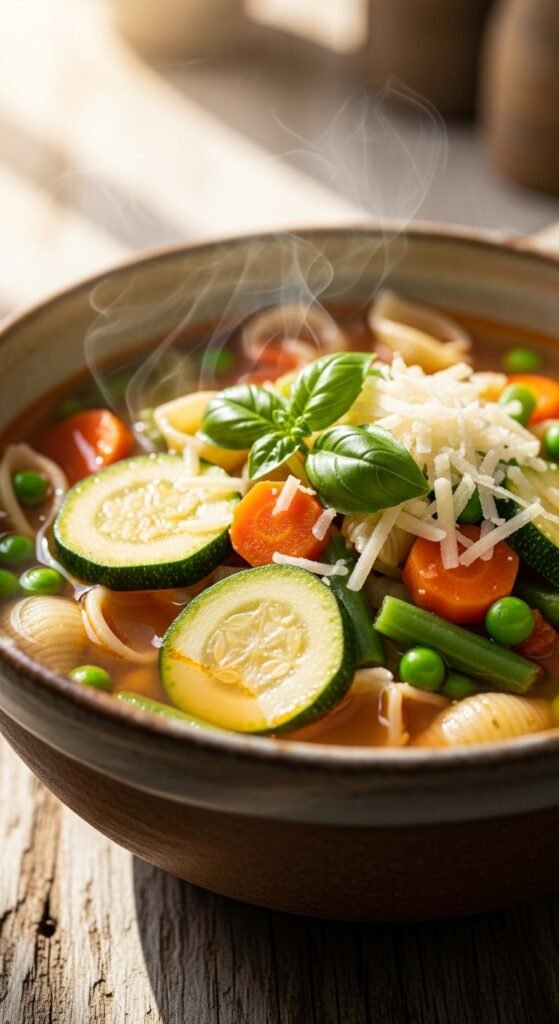
Step 1: Build the Flavor Base
In a large soup pot, heat olive oil over medium heat.
Add chopped onion and sauté gently for 4–5 minutes until soft and translucent.
Add garlic and cook for 30 seconds until fragrant.
This gentle start creates a clean, aromatic base.
Step 2: Add Hardy Vegetables First
Stir in:
- Carrots
- Potatoes
- Green beans
Cook for about 5 minutes to slightly soften.
These vegetables take longer to cook, so they go in first.
Step 3: Add Broth and Tomatoes
Pour in vegetable broth and diced tomatoes.
Bring to a gentle simmer.
Cover partially and cook for 15 minutes until potatoes are tender but not mushy.
Step 4: Add Softer Vegetables
Now stir in:
- Zucchini
- Yellow squash
- Peas
Simmer for another 5–7 minutes.
These vegetables should remain bright and slightly firm.
Step 5: Cook the Pasta
Add small pasta directly to the soup.
Cook according to package time (usually 8–10 minutes).
Stir occasionally to prevent sticking.
Step 6: Finish with Greens
Stir in spinach or baby kale during the last 2 minutes of cooking.
The greens should wilt but stay vibrant.
Season with salt and freshly ground black pepper.
Step 7: Final Touch
Turn off heat and add fresh basil.
Let the soup rest for 5–10 minutes before serving.
This allows flavors to settle.
The Perfect Texture
Minestrone Primavera should be:
- Light but satisfying
- Brothy, not thick
- Vegetables tender but still colorful
- Balanced and fresh tasting
- Not overly tomato-heavy
It should feel vibrant, not heavy.
Serving Suggestions
Serve warm with:
- Freshly grated Parmigiano Reggiano
- A drizzle of extra virgin olive oil
- Crusty Italian bread
It also tastes wonderful slightly warm rather than piping hot.
Common Mistakes to Avoid
Overcooking vegetables – They should stay colorful.
Using too much tomato – Primavera is lighter.
Overloading with pasta – It should not feel like pasta stew.
Skipping fresh herbs – Basil adds essential brightness.
Storage Tips
- Refrigerate up to 4 days
- Pasta may absorb broth; add splash of water when reheating
- Freezes well without pasta (cook pasta fresh when serving)
Why This Soup Feels Special
Minestrone Primavera is a reminder that Italian cooking is seasonal and respectful of ingredients. It celebrates what’s fresh and available, letting vegetables shine without heavy seasoning.
It’s comforting but clean. Filling but not heavy. Simple yet deeply satisfying.
Once you make it this way, it becomes a go-to soup for warmer months — light enough for spring, nourishing enough for any day of the week.