Walking into your first craft fair with a folding table and a box of handmade goods is exciting — and a little overwhelming. How you display your work matters just as much as the work itself. A well-styled craft booth draws people in from across the room, while a flat, cluttered one gets skipped over even when the products are genuinely beautiful.
These creative craft booth ideas are designed specifically for first-time vendors who want a setup that looks professional, feels welcoming, and actually sells. Most of these can be built on a tight budget with items from hardware stores, thrift shops, or your own garage.
Let’s build a booth that does your work justice.
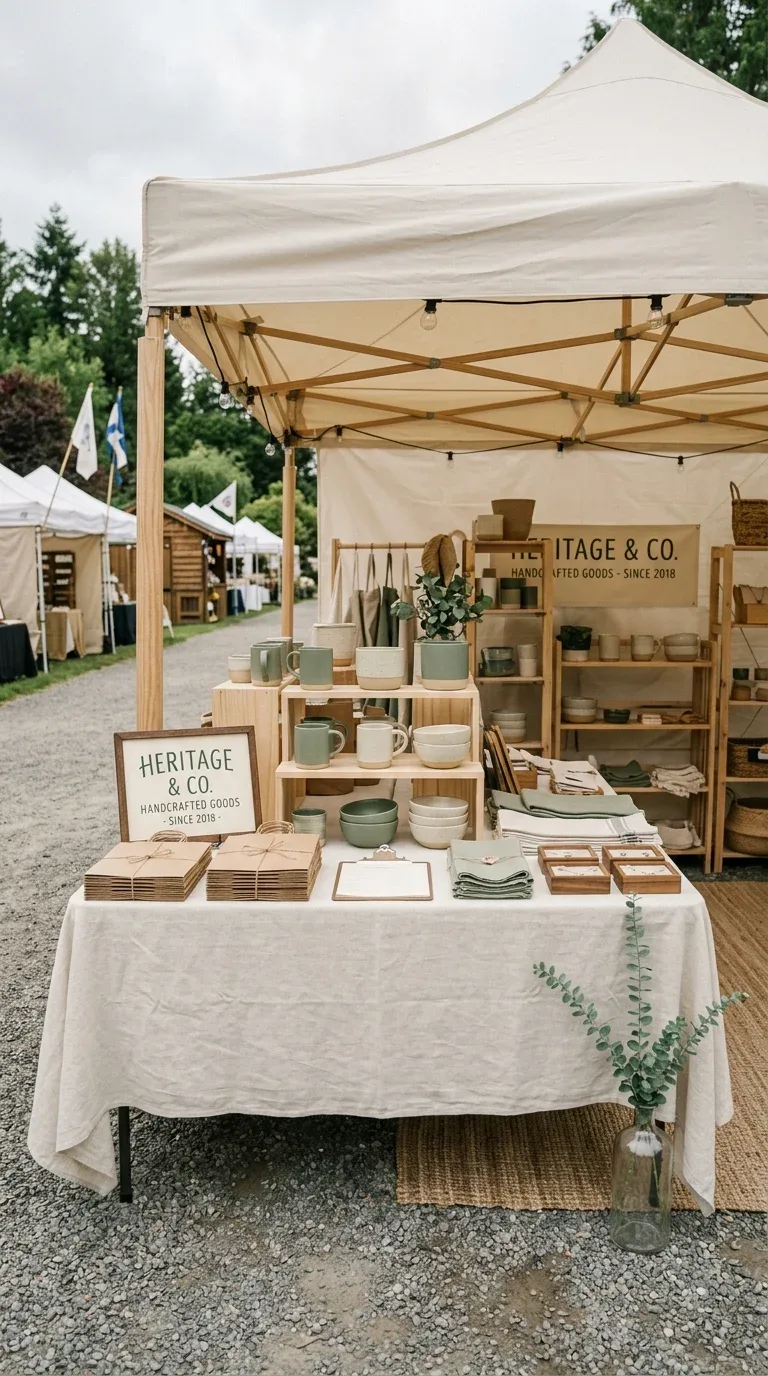
Start With a Cohesive Color Palette
Before you buy a single display prop, decide on two or three colors that will run through your entire booth — your tablecloth, signage, packaging, and props should all pull from the same family. This is the single most powerful craft booth display idea for first-time vendors because it makes even a simple setup look intentional and professional. Neutral palettes like cream, sage, and natural wood are endlessly versatile. A cohesive color story signals to shoppers that you take your brand seriously, and it makes your products stand out rather than compete with their surroundings.
Add Height With Wooden Crates or Risers
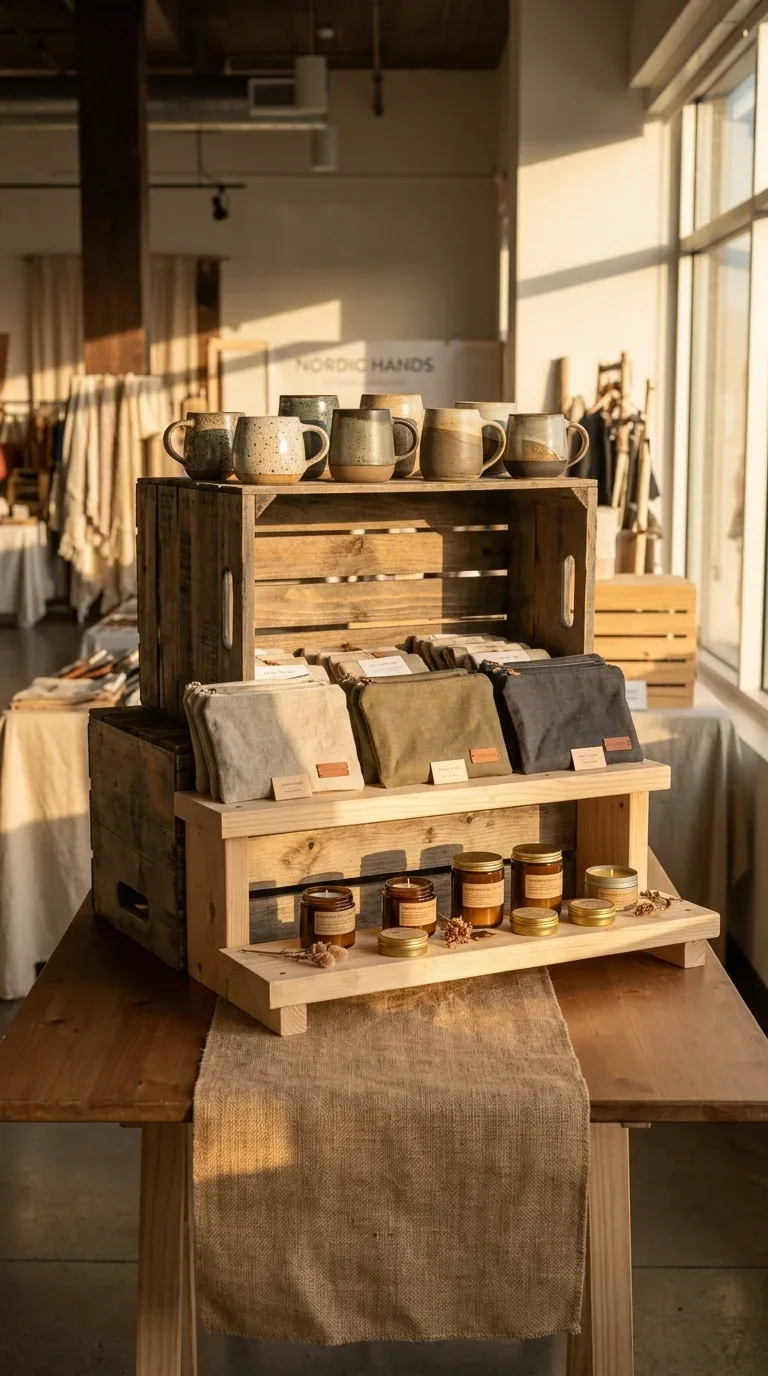
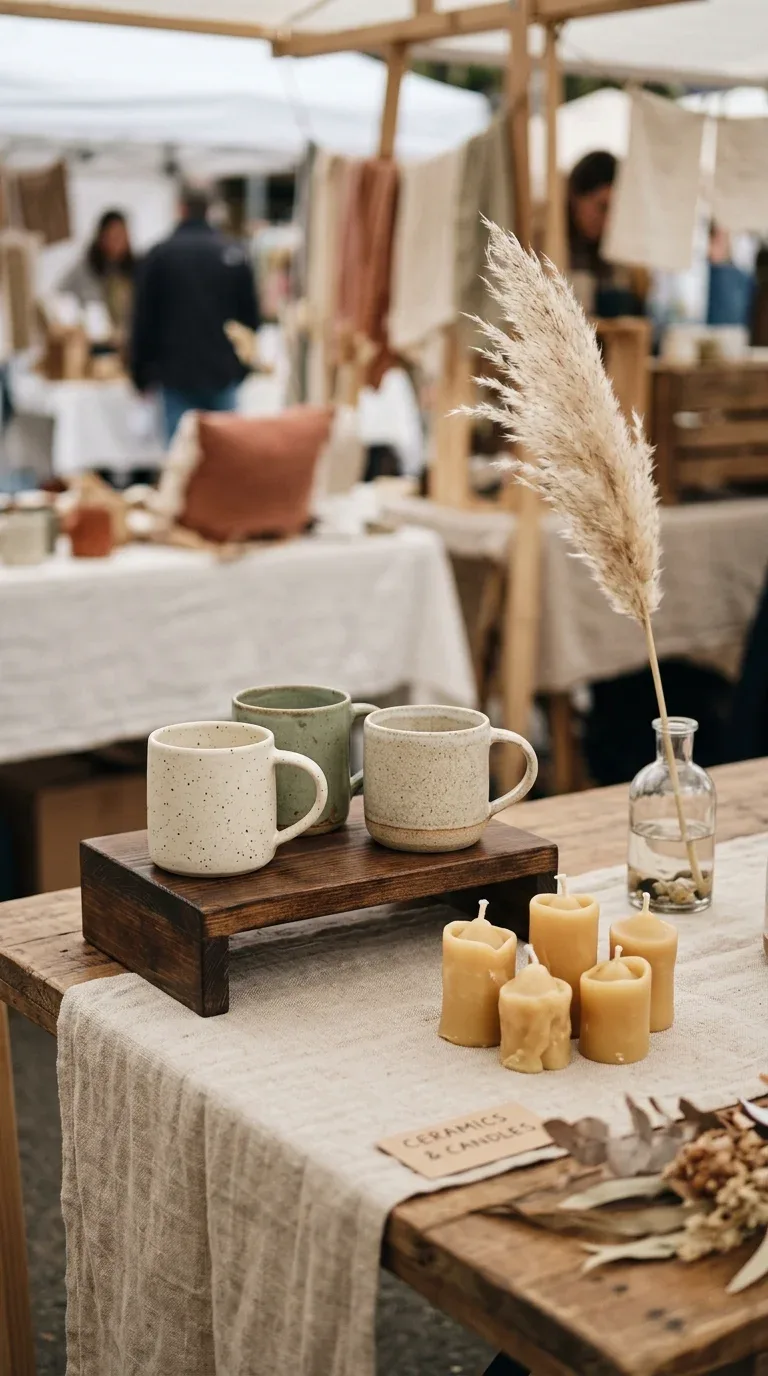
A flat table covered in products at the same level is one of the most common first-time vendor mistakes — and the fix is simple. Stack wooden crates, cut lumber risers, or old books under your tablecloth to create platforms of varying heights, then display products at multiple levels across the table. Height variation makes shoppers lean in, reach for things, and spend more time at your booth. It also gives the whole display a layered, intentional look that photographs beautifully for your own social media.
Use a Linen or Burlap Tablecloth
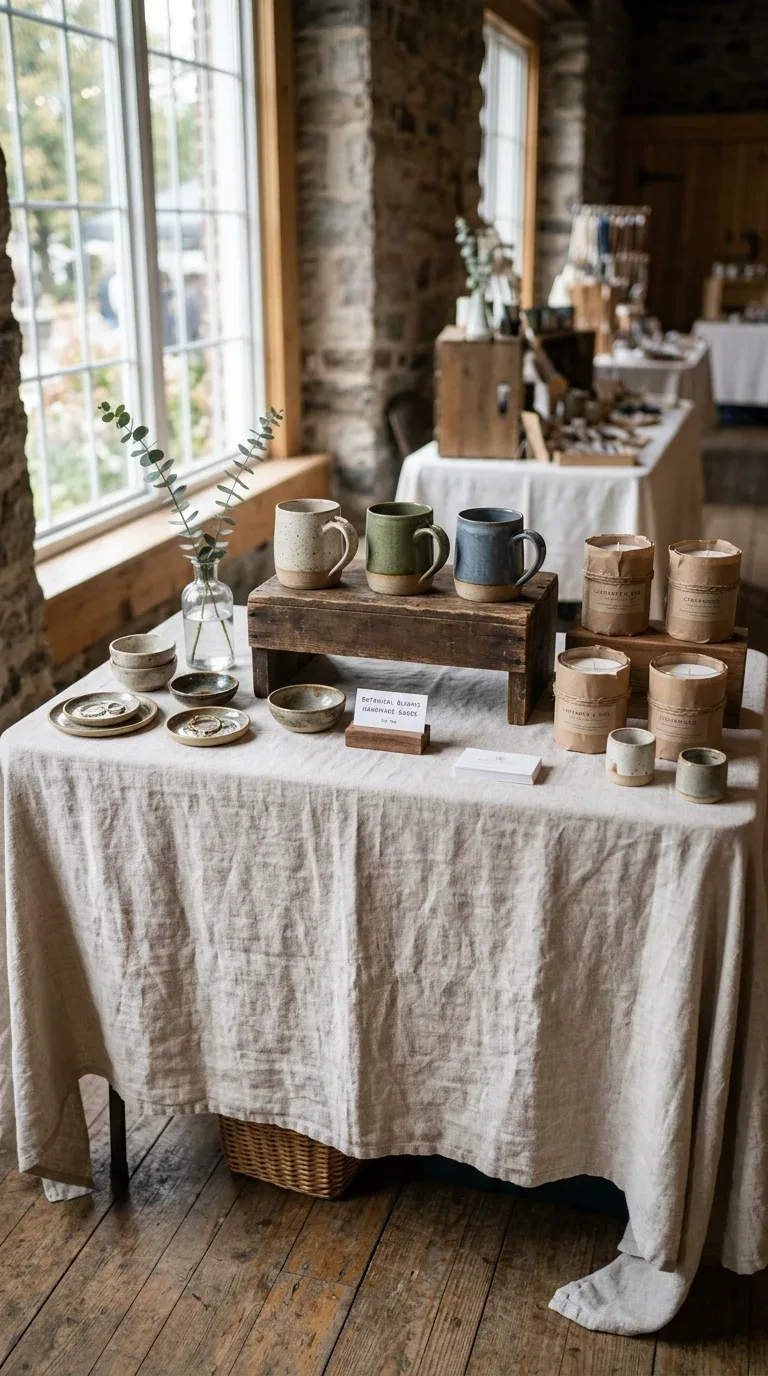
Your tablecloth is the foundation of your entire craft booth display, and it sets the tone before anyone looks at a single product. A natural linen or burlap cloth instantly communicates handmade, quality, and warmth in a way that a plastic folding table cover simply never can. Choose an undyed or subtly toned cloth that complements your products rather than competing with them. Drape it all the way to the floor on the customer-facing side so you can store your extra stock, bags, and supplies underneath without anyone seeing the mess.
Create a Vertical Display With a Pegboard
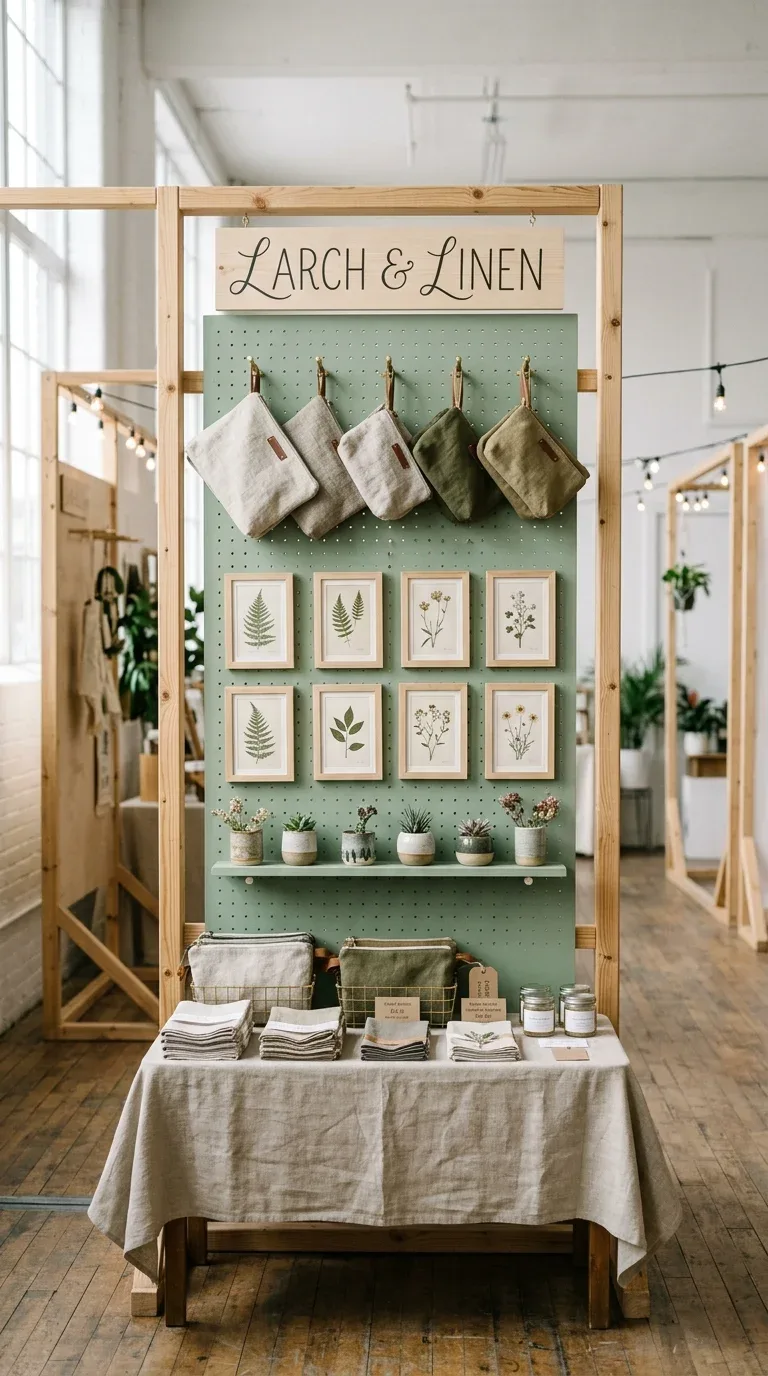
A pegboard frame is one of the most versatile craft booth ideas for any vendor because it lets you hang products, signage, and decorative elements vertically without needing a wall. Build a simple freestanding frame from inexpensive lumber, attach a sheet of pegboard, and use hooks and small shelves to display your items at eye level. Shoppers are naturally drawn to vertical displays because they can see everything without bending down or leaning over. Paint the pegboard in your brand’s accent color for a backdrop that doubles as marketing.
Label Everything Clearly With Handwritten Tags
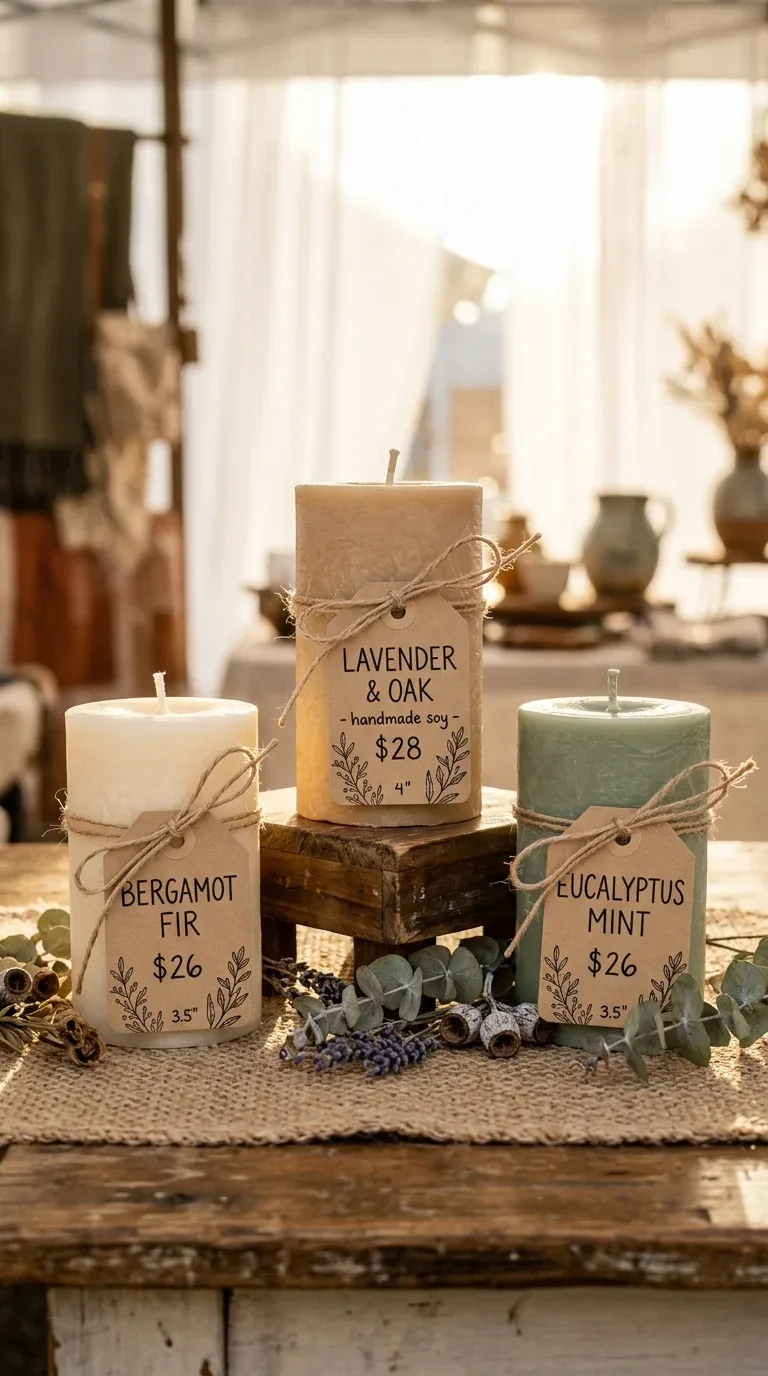
Shoppers at craft fairs almost never ask about prices — if they have to search for a tag or wonder how much something costs, they’ll quietly move on. Label every single item clearly with a handwritten kraft paper tag on twine or a small tent card in front of each product grouping. The handwritten element keeps things feeling personal and artisan rather than overly commercial. Keep the font consistent and the tags the same size so your whole display reads as cohesive. This is one of those craft booth ideas that costs almost nothing but makes a measurable difference in sales.
Bring a Simple Branded Sign
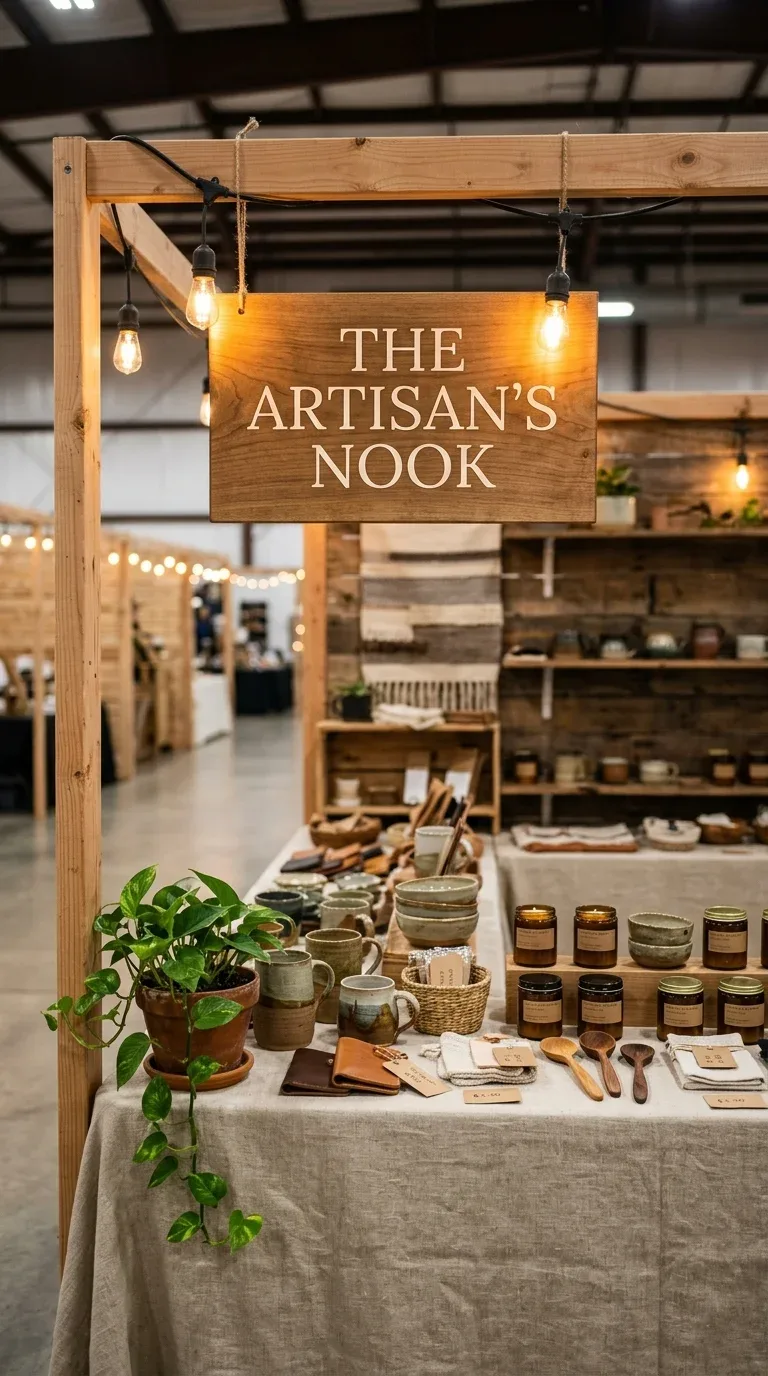
Your booth needs a sign, full stop. Shoppers walk past dozens of booths and won’t remember where they bought something if there’s no name attached. A simple wooden sign with your brand name routed or painted on it, a framed chalkboard, or even a beautiful hand-lettered canvas hung from a pegboard all work well. Place it high enough to be visible from a distance — ideally at eye level or above when someone is standing at your table. This is the one craft booth investment that pays back immediately and at every future market.
Group Products in Odd Numbers
There’s a simple visual design principle that every stylist uses: odd-numbered groupings always look more natural than even ones. Three candles, five soap bars, seven pottery mugs — the eye finds these groupings more interesting and balanced than two or four of the same item side by side. Apply this to every cluster across your craft booth display and the whole table will feel more intentionally curated. It sounds like a small thing, but it’s the kind of detail that separates a beginner-looking booth from a polished, professional one.
Use Negative Space Intentionally
Resist the urge to cover every inch of your table. Shoppers overwhelmed by a wall of product will make a fast pass and keep walking, while a display with breathing room feels approachable and lets individual items shine. Leave deliberate gaps between product groupings and keep the front edge of your table relatively clear so customers feel welcomed in rather than blocked. Negative space is one of those craft booth display ideas that feels counterintuitive — you want to show everything you made — but it genuinely increases the time shoppers spend at your booth.
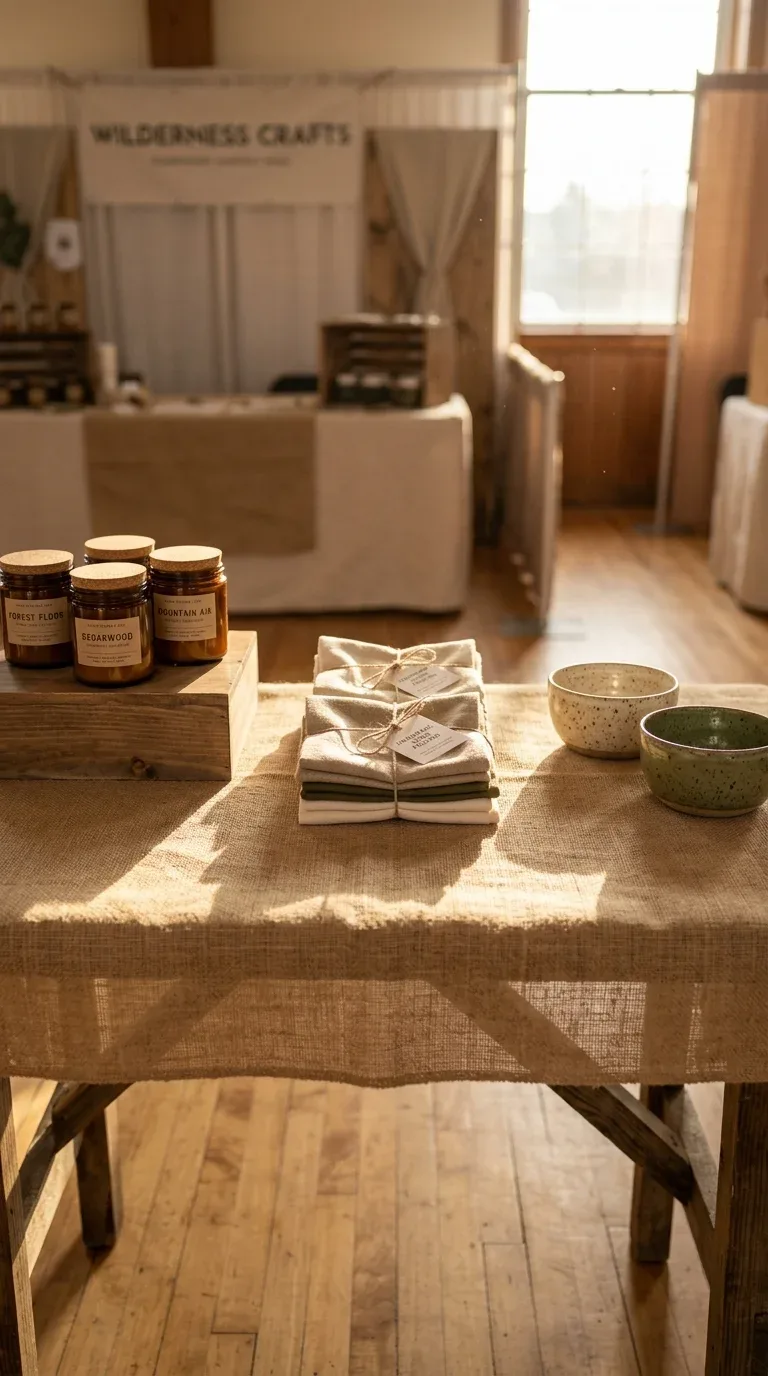
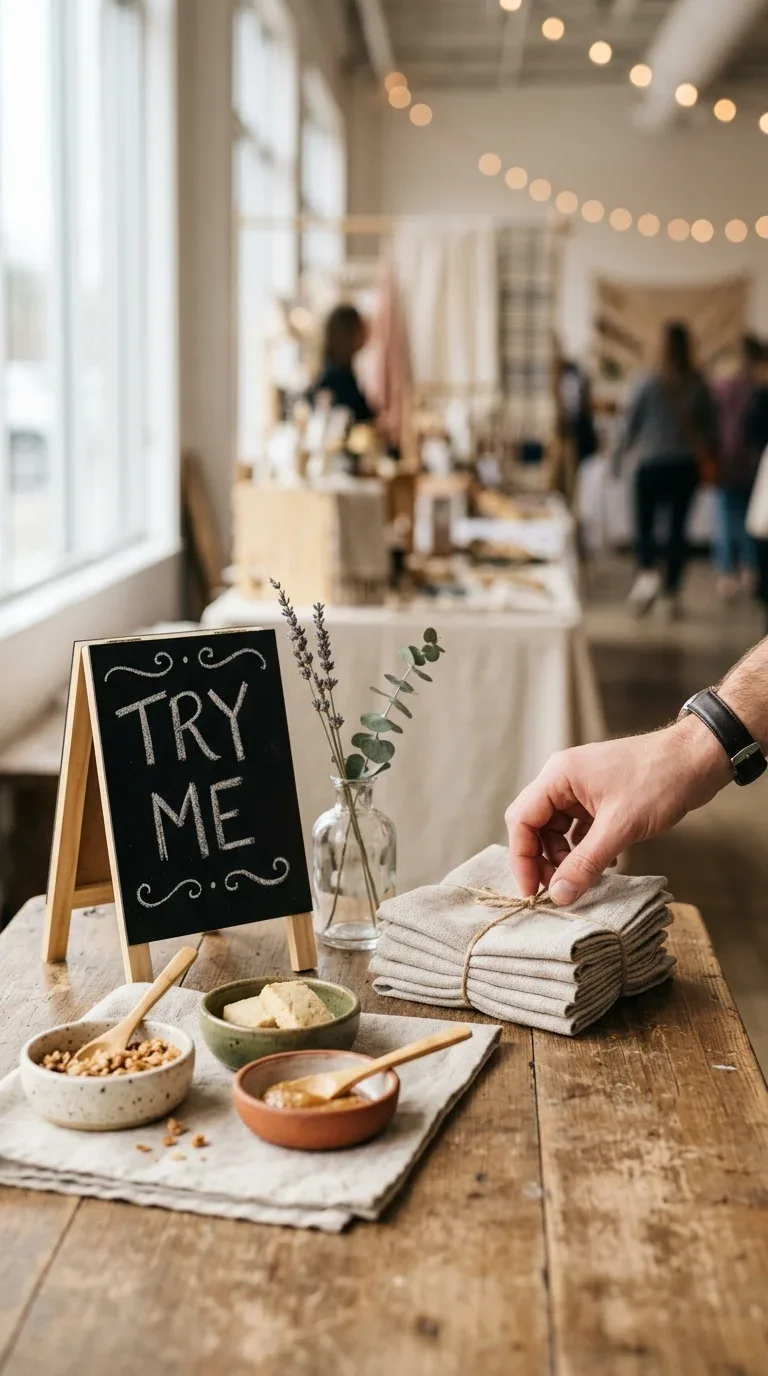
Offer a Small Free Sample or Demo
Giving shoppers something sensory to experience — a lotion to try, a candle to smell, a small piece of food to taste — dramatically increases the time they spend at your booth and the connection they feel to your brand. Set up a small sample station at the front corner of your table with a simple sign inviting people to try. This is one of the most effective creative craft booth ideas for first-time vendors because it removes the barrier between browsing and buying. People who try your product first are far more likely to purchase.
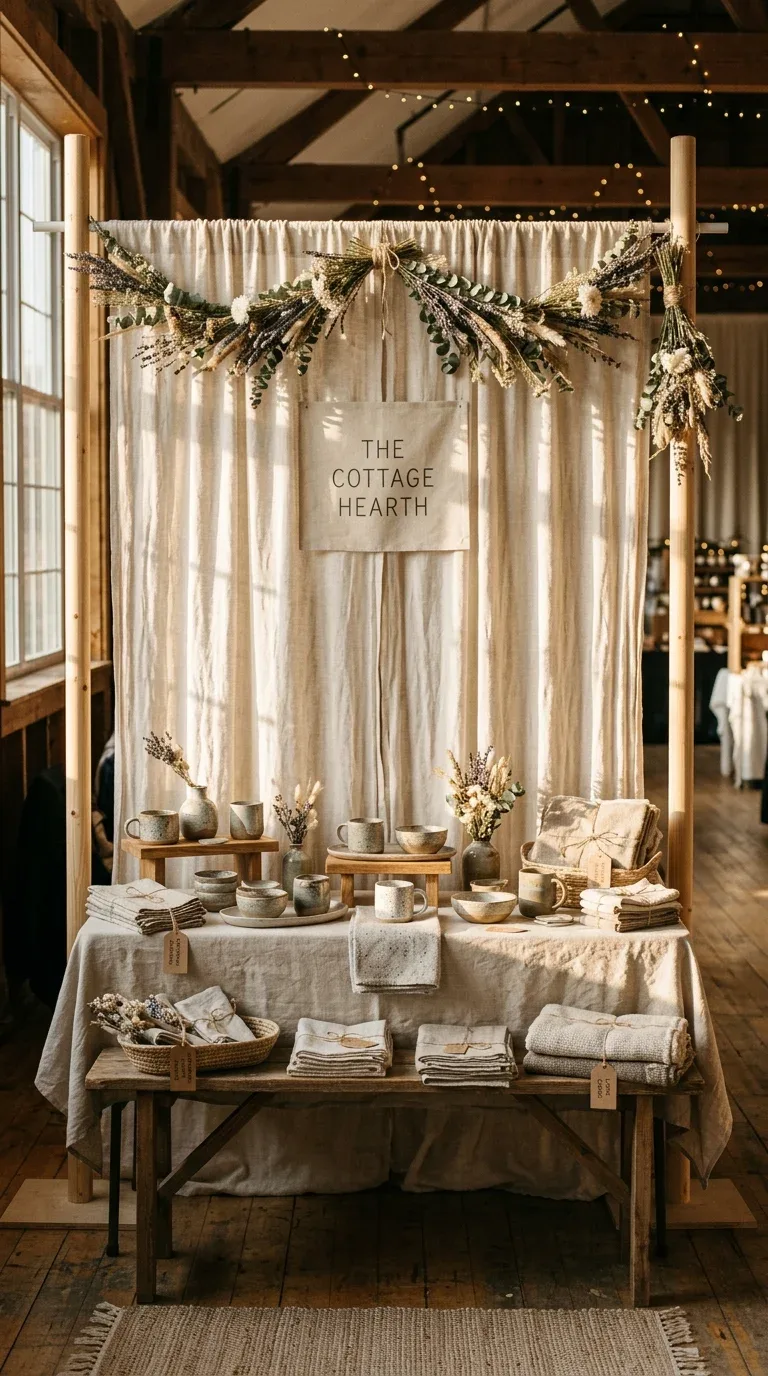
Hang a Simple Fabric Backdrop
A fabric backdrop behind your booth — draped from a pipe-and-drape stand, a tension rod between two poles, or even clipped to your canopy frame — adds depth and visual context that a bare wall never provides. Macrame, linen, cream muslin, or even a vintage quilt all work beautifully depending on your brand’s aesthetic. The backdrop keeps the focus on your products by preventing the busy fair environment behind you from competing for visual attention. It also gives your booth photography context that reads far better on Instagram and Pinterest.
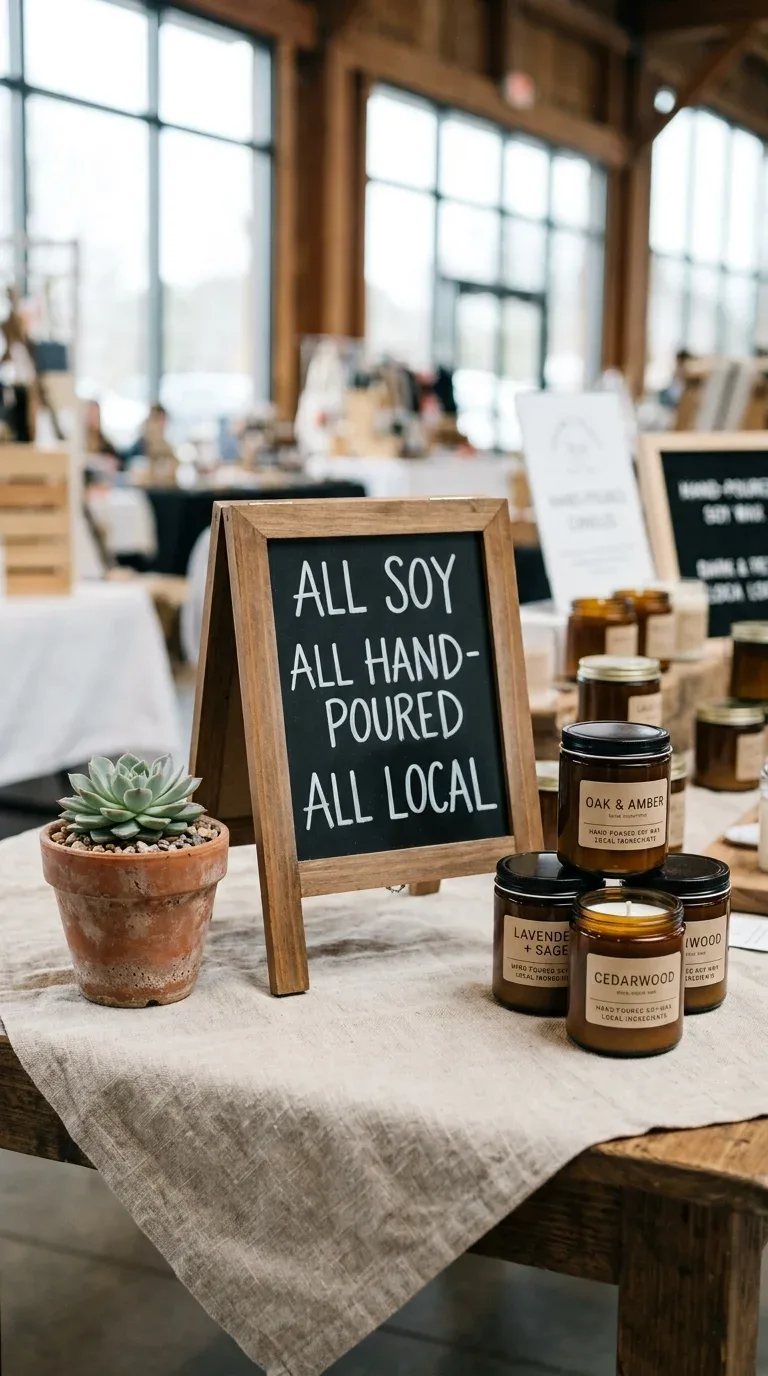
Use a Chalkboard for Specials and Storytelling
A small chalkboard sign does more than just list a daily special — it’s a place to briefly tell your story, share what makes your products unique, or invite a connection. Something as simple as “All soy, all hand-poured, all local” or “Made in my kitchen every Friday” gives shoppers a reason to feel good about buying from you rather than a bigger brand. Place the chalkboard where it’s naturally visible from a few feet away, and keep the writing short enough to read in five seconds. This is the kind of craft booth detail that turns a casual browser into a returning customer.
Display Your Business Cards Prominently
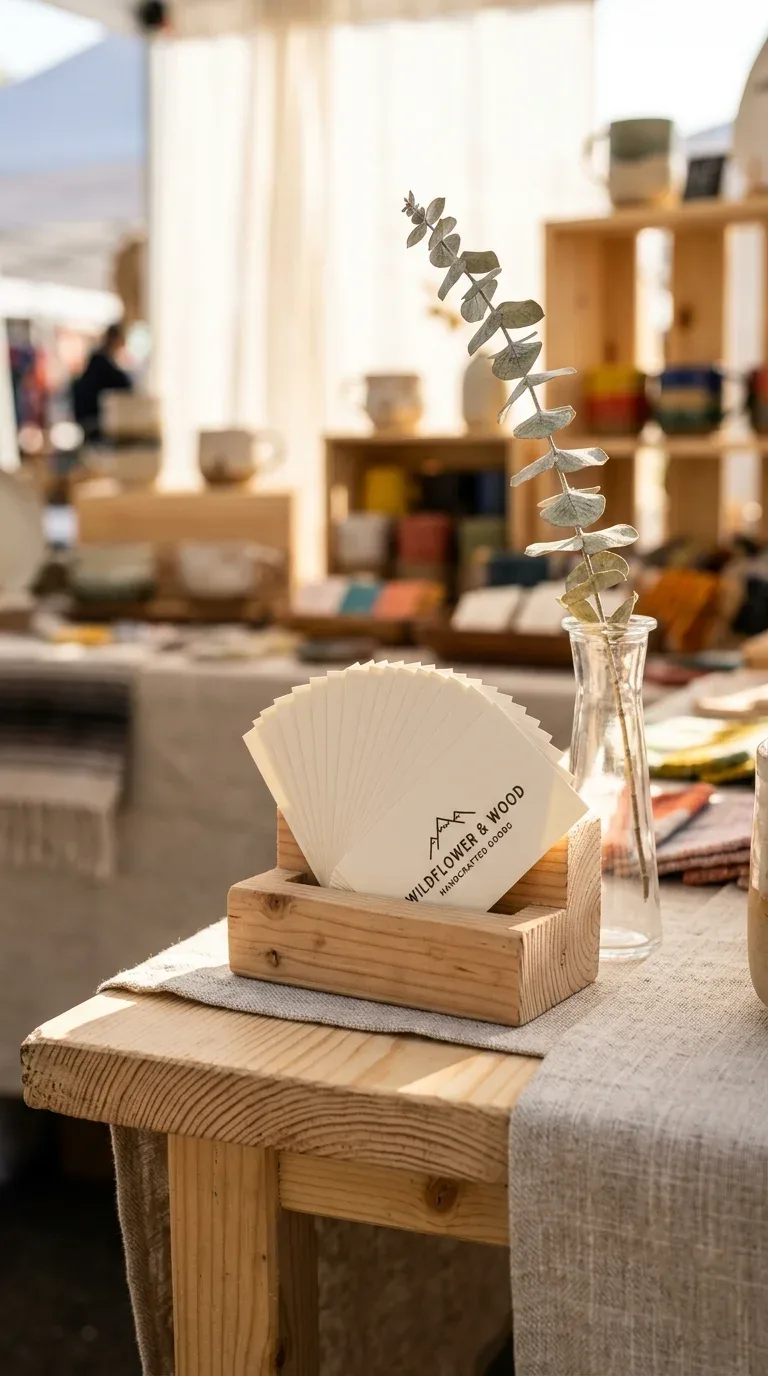
Not every shopper at a craft fair is ready to buy in the moment — some are scouting, budgeting, or shopping for a gift they haven’t decided on yet. Make it incredibly easy for them to take your information home by placing a small card holder or simple wooden tray of business cards right at the front edge of your table. Include your Instagram handle, website, and Etsy shop if you have one. Business cards from craft fairs are one of the most underrated long-tail sales tools for first-time vendors — the sale that happens two weeks later is still a sale.
Create a Signature Scent or Sound
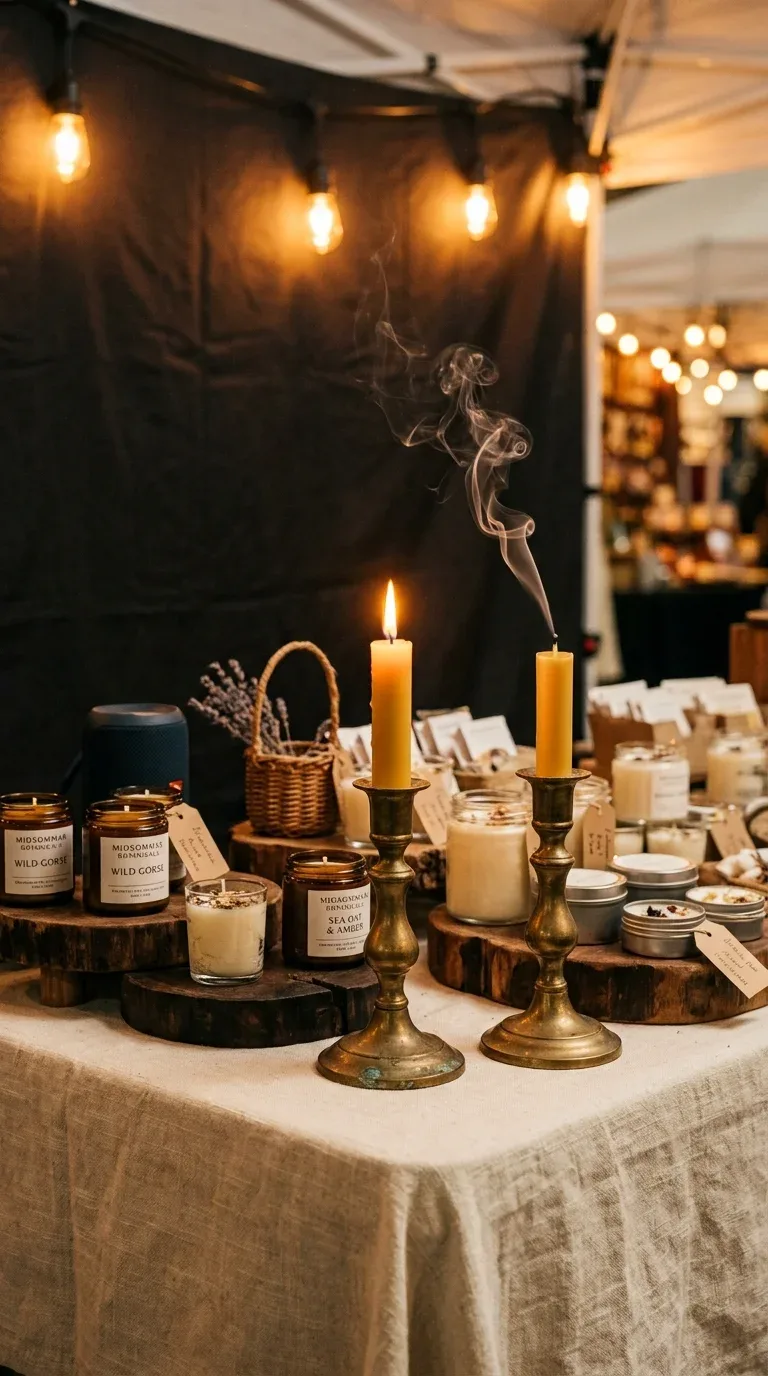
The most memorable craft booths engage more than just the eyes. If you sell candles, have one burning. If you sell bath products, a small reed diffuser makes the air around your booth smell amazing. Even soft background music playing from a small Bluetooth speaker — folk, ambient, or anything that fits your brand — creates a sensory bubble that makes shoppers feel like they’ve stepped into a different, more intentional space. These sensory details are surprisingly powerful craft booth ideas that cost almost nothing to implement but significantly increase dwell time.
Bring a Consistent Packaging System
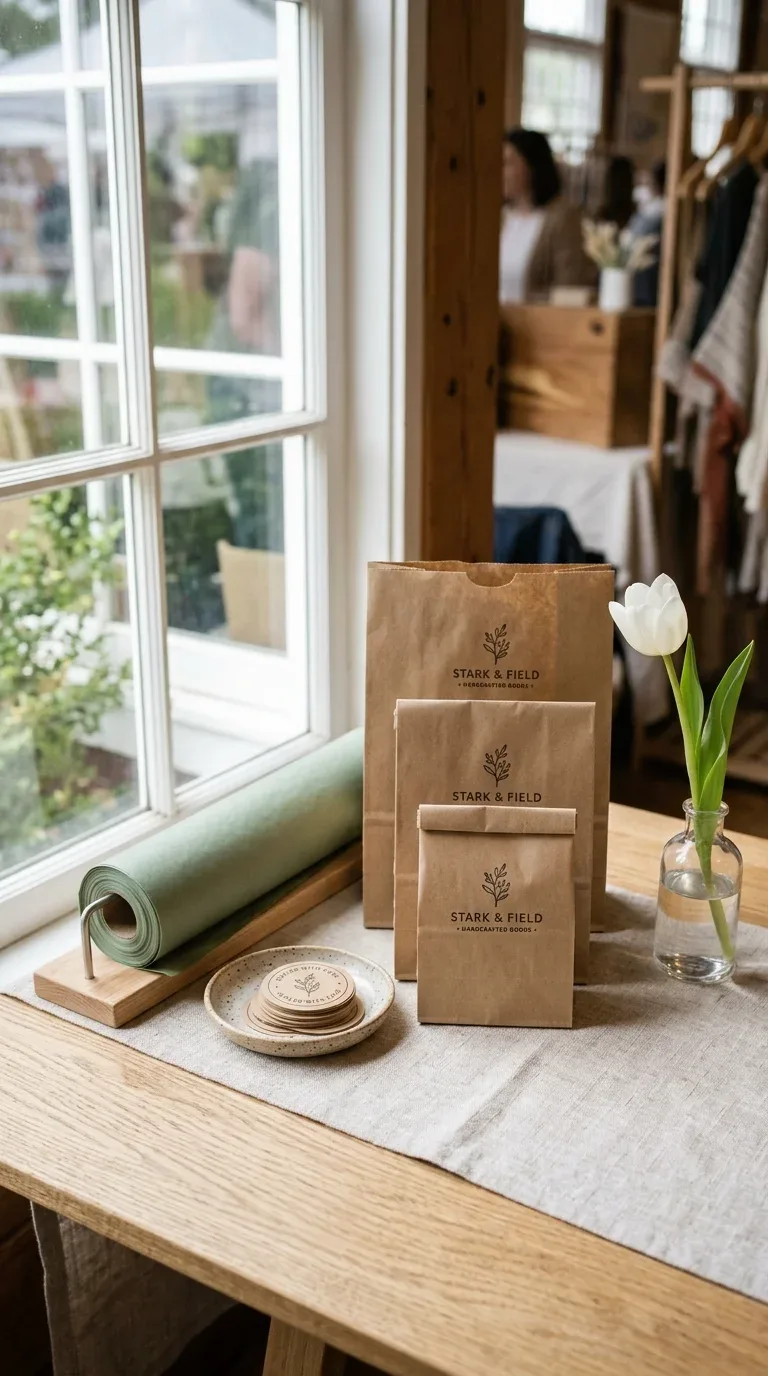
The experience of buying something doesn’t end when the shopper hands over their money — it continues through how their purchase is wrapped, bagged, and handed to them. Consistent packaging is one of the craft booth ideas that first-time vendors most often overlook. Kraft bags with your logo stamp, tissue paper in your brand’s accent color, or a simple branded sticker sealing a cellophane wrap all signal professionalism and care. The packaging becomes part of the product, and shoppers who receive something beautifully packaged are far more likely to post about it, gift it, and come back again.
Style One Hero Vignette at Eye Level
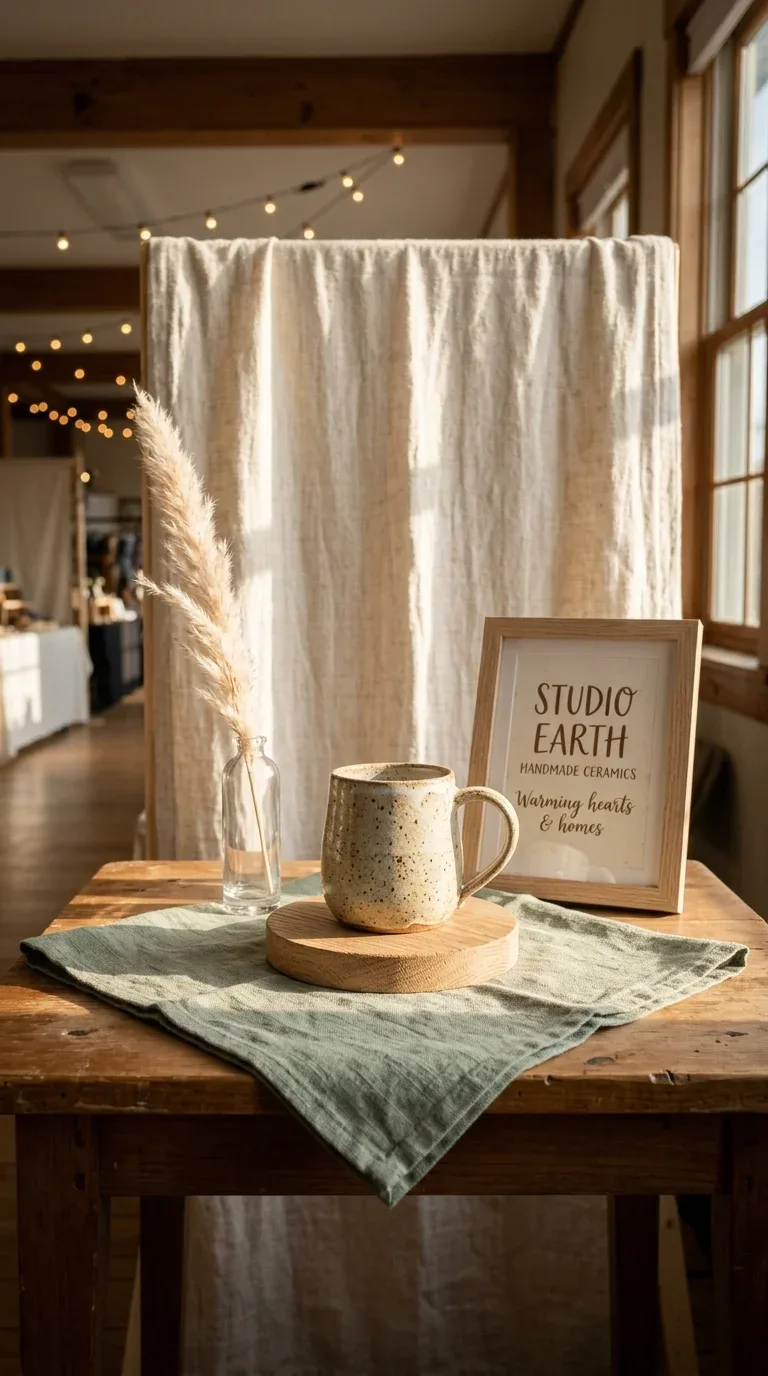
Even if the rest of your table is a simple layout, create one small, beautifully styled vignette at eye level that showcases your absolute best product in its best possible context. Think of it as your booth’s cover photo — it’s what people photograph, what they stop for, and what draws them from across the aisle. Style it like a mini lifestyle scene: your product, one complementary prop, one small plant or dried stem, and a backdrop element like a small framed print or a swatch of fabric. This hero display does the marketing heavy lifting while the rest of your table handles the sales inventory.
Plan for a Cash Float and Card Reader
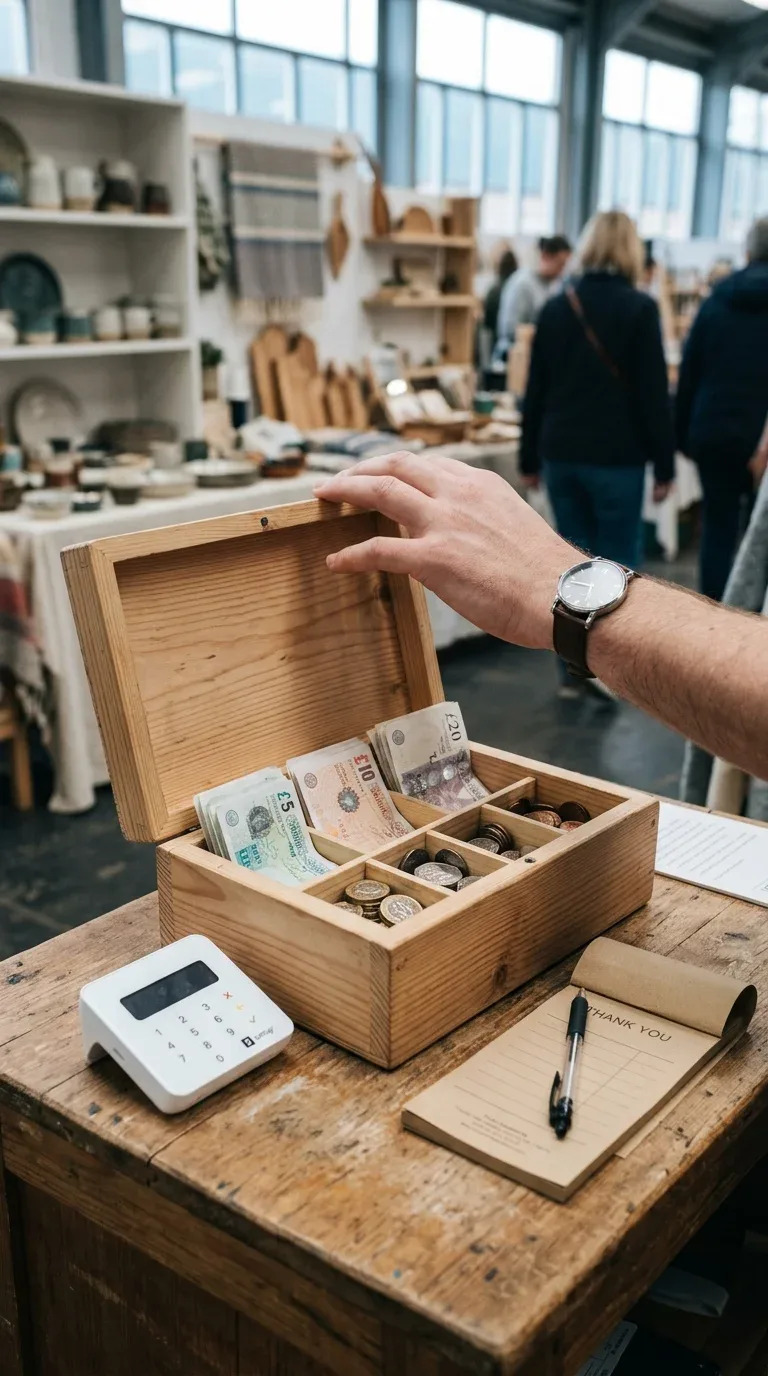
This is less glamorous than the other craft booth display ideas on this list, but it might be the most important one. Come prepared with a cash float of small bills and coins, and have your card reader charged and tested before the market opens. More than half of shoppers at craft fairs prefer to pay by card, and a vendor who can’t accept cards loses those sales immediately. Keep your payment setup clean and accessible — a small wooden box for cash and your card reader propped visible near the front of the table signals readiness and professionalism without looking like a checkout counter.
Rehearse Your Setup at Home First
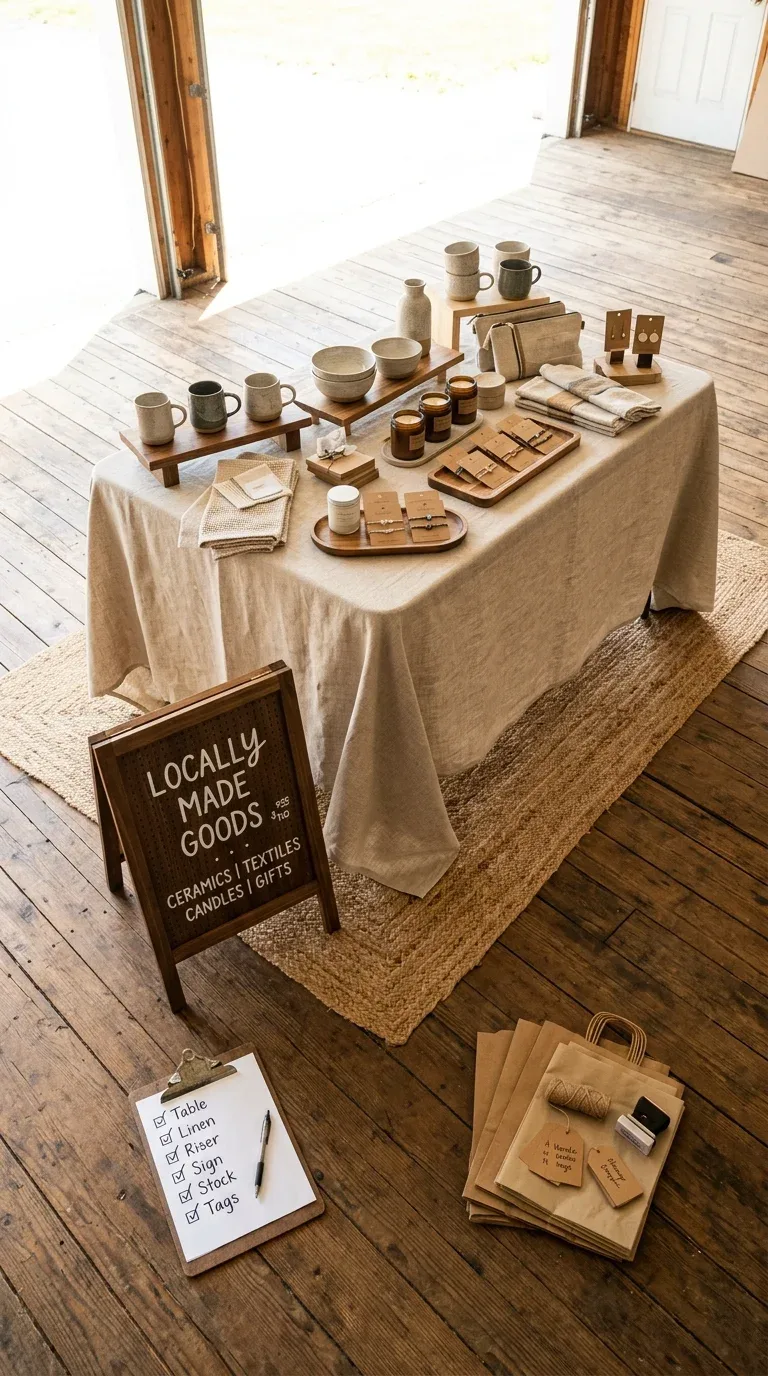
The morning of your first craft fair is not the time to figure out how everything fits together. Set up your complete booth at home — on the floor, in the garage, wherever you have space — at least once before market day. Time yourself, photograph it from the customer’s perspective, and make adjustments. You’ll notice things you never would have caught in the planning stage: a riser that’s too tall, a tablecloth that’s too short, products that keep falling over. A dry run is one of the best creative craft booth ideas for first-time vendors because it turns market morning from chaos into confidence.
Quick Budget Guide
Under $25: Linen tablecloth, handwritten kraft tags, business card display, odd-number grouping, negative space styling, branded sticker seals, chalkboard sign
$25–$75: Wooden crates and risers, fabric backdrop, branded sign (DIY painted), consistent kraft packaging, small Bluetooth speaker
$75–$150: Freestanding pegboard display frame, custom routed wooden sign, full cohesive packaging system
Splurge-worthy: A card reader with a reliable stand and a well-built freestanding pegboard frame are the two investments that pay back most quickly — both will serve you at every future market.
Why This Actually Works
The science behind a good craft booth is the same as the science behind any retail environment: people make purchase decisions based on how a space makes them feel before they ever look closely at a product. A booth that feels warm, cohesive, and well-organized communicates trustworthiness and quality — even subconsciously. Shoppers who feel comfortable in your space stay longer, and the longer they stay, the more likely they are to buy.
Height variation and negative space are the two most underused tools in first-time vendor setups. Height gives the display dimensionality and draws the eye through the booth rather than across it in a single flat sweep. Negative space gives that eye somewhere to rest and makes individual products feel considered and special rather than just part of a pile. Together, they’re responsible for most of the gap between a booth that gets walked past and one that stops people in their tracks.For more home decor decoration ideas you can visit home decor category.
And the personal touches — the handwritten tags, the sample station, the story on the chalkboard — are what convert a browser into a buyer and a buyer into a repeat customer. At a craft fair, you’re not just selling a product. You’re selling the experience of buying from a real person who made something with their hands. Every detail of your booth either reinforces that story or works against it.
Final Thoughts
Your first craft fair is going to teach you more about your brand, your customers, and your display than any amount of planning ever could — and that’s a good thing. These creative craft booth ideas for first-time vendors give you a strong starting point, but the best setup is always the one you refine market by market based on what you actually observe.
Start with the ideas on this list that feel most doable, go do the market, take notes, and adjust from there. Save this post to your Pinterest craft board so you can come back to it before your next event — and if you try any of these ideas, I’d love to hear how your first fair went in the comments!