
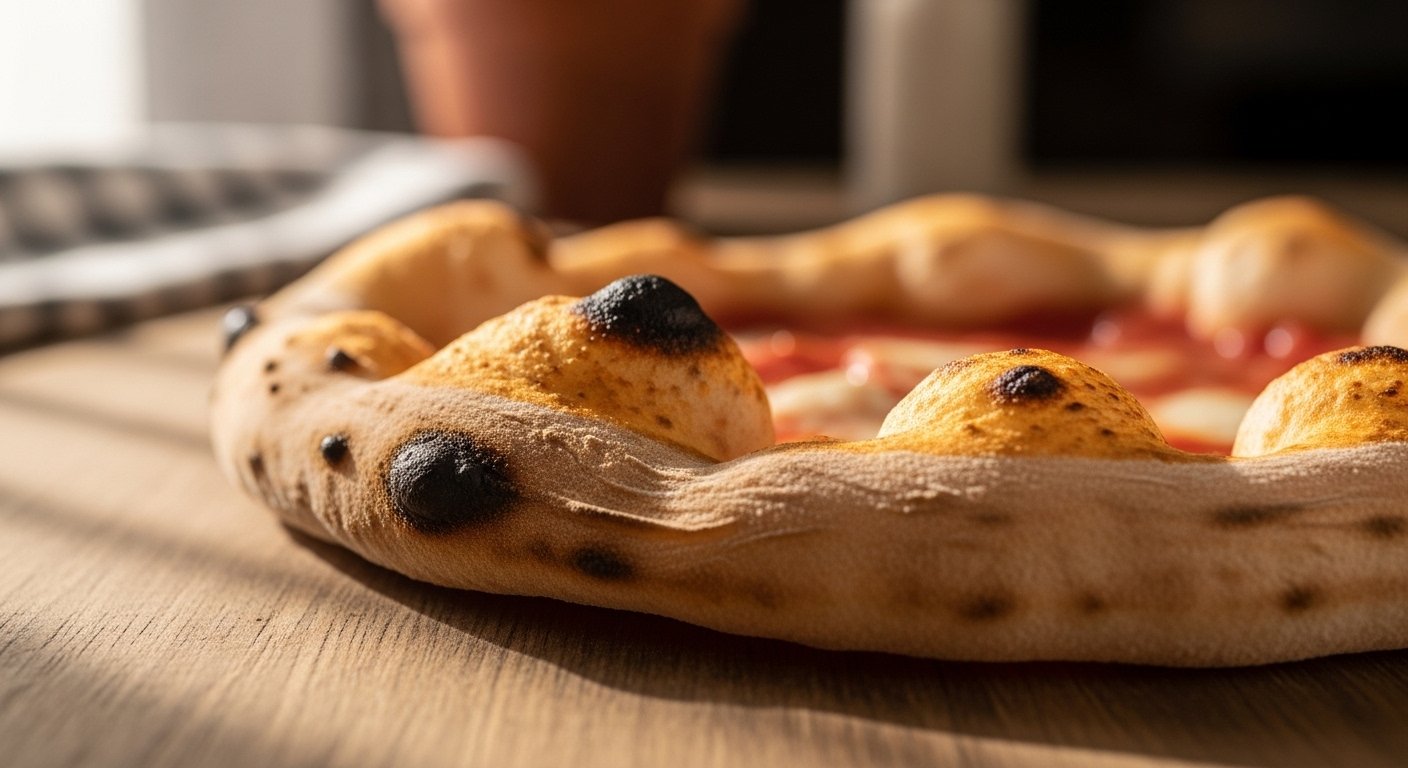
There is something magical about authentic Italian pizza crust. The way it crackles slightly when sliced, the airy chew in the center, and that beautifully blistered edge it’s not just dough, it’s tradition.
After years of testing different techniques, flour types, resting times, and hydration levels, this recipe consistently delivers the kind of crust you would expect from a wood-fired oven in Naples. It is simple, honest, and incredibly reliable.
This guide walks step-by-step through creating a true Italian-style pizza crust at home no shortcuts, no unnecessary tricks, just classic technique done right.
What Makes Italian Pizza Crust Different?
Authentic Italian pizza crust is:
- Thin in the center
- Puffy and airy around the edges (cornicione)
- Slightly crisp on the outside
- Soft and chewy inside
- Made with minimal ingredients
Traditional Neapolitan pizza uses only flour, water, salt, and yeast. No sugar. No oil. The flavor develops through fermentation — and that’s where the real magic happens.
Authentic Italian Pizza Dough Recipe
Ingredients (Makes 2 large 12-inch pizzas)
- 3 ½ cups (450g) 00 flour or bread flour
- 1 ½ cups (350ml) lukewarm water
- 2 teaspoons salt
- ½ teaspoon active dry yeast
That’s it. Four ingredients.
Step-by-Step Method

1. Activate the Yeast
In a bowl, mix lukewarm water with yeast. Let it sit for 5–10 minutes until slightly foamy.
2. Mix the Dough
Add flour gradually into the water mixture. Stir until combined.
3. Add Salt
Mix salt in once the dough starts forming. Knead for 8–10 minutes until smooth and elastic.
The dough should feel soft but not sticky. If it sticks heavily to your hands, add a small amount of flour — just a tablespoon at a time.
4. First Rise (Bulk Fermentation)
Place dough in a lightly floured bowl. Cover and let rise at room temperature for 2 hours.
5. Cold Fermentation (Flavor Booster – Highly Recommended)
After the first rise, divide into two balls. Place in airtight containers and refrigerate for 24 hours.
This step is what transforms good dough into exceptional Italian crust. The slow fermentation deepens flavor and improves texture dramatically.
6. Bring to Room Temperature
Remove dough from fridge 1 hour before baking.
7. Shape — Don’t Roll
Gently press from the center outward using your fingertips. Avoid a rolling pin. This keeps the air in the edges.
8. Bake Hot and Fast
Preheat oven to highest setting (usually 500°F / 260°C) for at least 30 minutes.
Bake pizza directly on a preheated surface for 7–10 minutes until crust is golden and blistered.
Common Mistakes to Avoid
Using too much flour while shaping – It makes crust dense.
Skipping fermentation time – Flavor needs time to develop.
Rolling the dough flat – You lose the airy edge.
Baking at low temperature – Pizza needs high heat.
Why This Recipe Works
This recipe respects traditional Italian ratios. Hydration is balanced for home ovens. The fermentation method improves gluten development naturally without extra additives.
The result is:
- Light and airy interior
- Beautiful leopard spotting (when baked hot enough)
- Balanced chew and crispness
It’s reliable, beginner-friendly, and authentic.
Recommended Video Tutorial
For a visual step-by-step demonstration of authentic technique, this video explains stretching and fermentation beautifully:
It’s highly recommended for beginners who want to see proper dough handling in action.
Final Thoughts
Great pizza crust is not complicated — but it does require patience and respect for the process.
With just flour, water, salt, and yeast, and a little time, anyone can create restaurant-quality Italian pizza crust at home.
Once mastered, this dough becomes a foundation for endless creativity — Margherita, Marinara, Prosciutto, or even white pizzas.
The beauty of Italian cooking lies in simplicity. And this crust proves that sometimes, less truly is more.